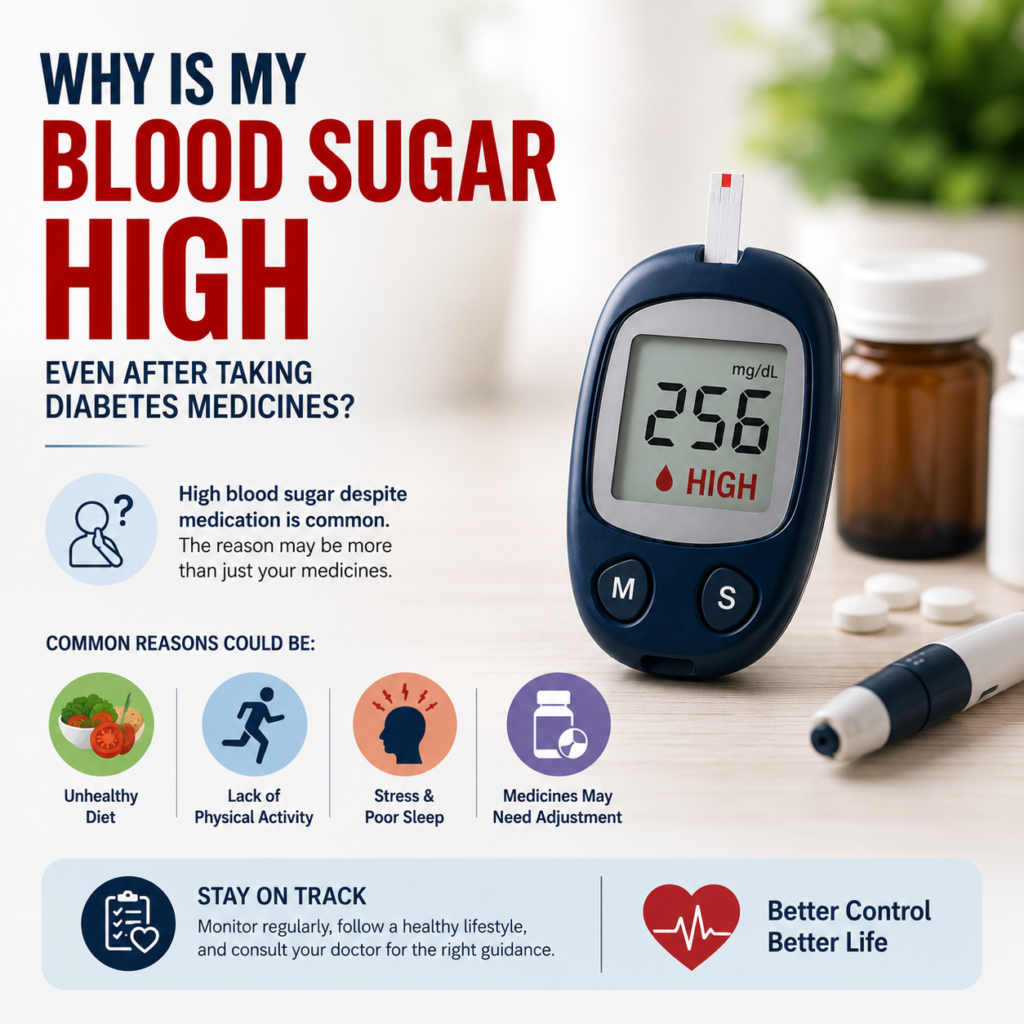
Seeing high blood sugar readings despite taking your medicines can feel discouraging.
You may start wondering whether the medicines are working, whether your Diabetes is getting worse, or if you’re doing something wrong.
The good news is that high blood sugar despite medication is a common issue, and in many cases, the reason can be identified and corrected with the right guidance.
Diabetes management is about much more than taking tablets or insulin. Your diet, physical activity, sleep quality, stress levels, and overall health all play important roles in determining how well your blood sugar stays under control.
Understanding these factors can help you take the right steps toward better Diabetes management and reduce the risk of long-term complications.
This opening feels more human, patient-focused, and trustworthy. It immediately addresses the reader’s concern before moving into the educational part of the article. It also improves engagement because readers feel understood rather than feeling like they are reading a generic health article.
High blood sugar despite medication is a common concern among people living with Diabetes.
Understanding Diabetes Medicines
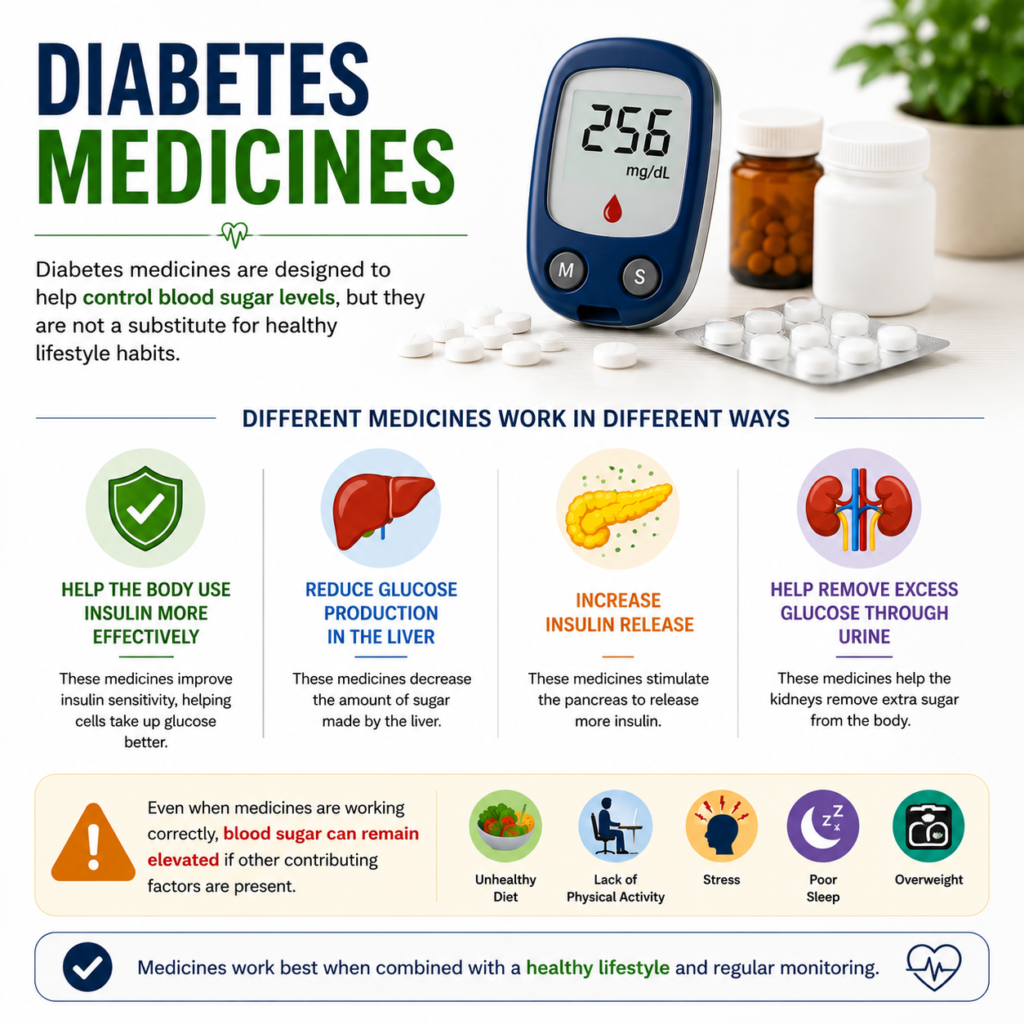
Diabetes medicines are designed to help control blood sugar levels, but they are not a substitute for healthy lifestyle habits.
Different medicines work in different ways:
- Some help the body use insulin more effectively.
- Some reduce glucose production in the liver.
- Some increase insulin release.
- Others help remove excess glucose through urine.
Even when medicines are working correctly, blood sugar can remain elevated if other contributing factors are present.
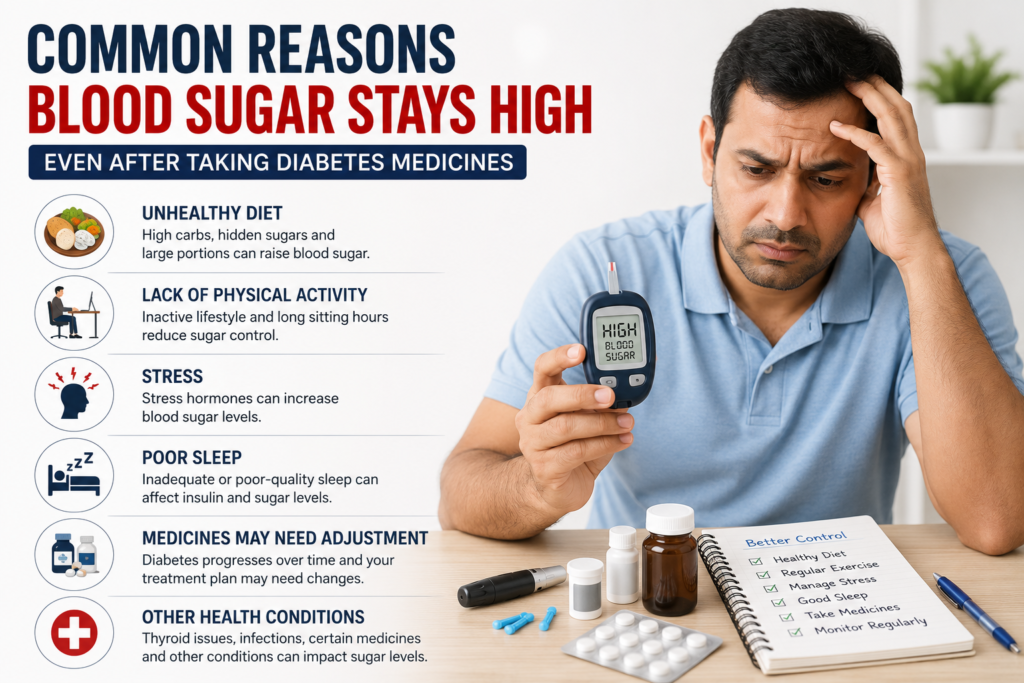
Common Causes of High Blood Sugar Despite Medication
1. Diet Is Affecting Your Blood Sugar More Than You Realize
Many patients focus only on avoiding sugar while overlooking other foods that can raise blood glucose.
Common examples include:
- White rice
- Refined flour products
- Sweetened beverages
- Packaged snacks
- Excessive fruit portions
Even foods that appear healthy can increase blood sugar when consumed in large quantities.
A balanced meal plan remains one of the most important parts of Diabetes management.
2. Physical Activity Is Insufficient
Regular movement helps your muscles use glucose more efficiently.
Long sitting hours, desk jobs, and inactive lifestyles can make blood sugar control more difficult, even if medications are being taken correctly.
Simple activities such as:
- Walking
- Isometric exercises
- Light strength training
- Daily stretching
may support better glucose control when performed consistently.
3. Stress Can Raise Blood Sugar Levels
Many people underestimate the impact of stress on Diabetes.
When you experience ongoing stress, your body releases hormones such as cortisol and adrenaline. These hormones can increase blood sugar levels, making diabetes harder to manage.
Common sources of stress include:
- Work pressure
- Financial concerns
- Family responsibilities
- Health-related anxiety
Managing stress is often an overlooked part of Diabetes treatment.
4. Poor Sleep May Be Contributing
Sleep and blood sugar are closely connected.
Research has shown that inadequate or poor-quality sleep may affect insulin sensitivity and glucose regulation.
If you regularly:
- Sleep less than 7 hours
- Wake up frequently at night
- Have untreated sleep disorders
your blood sugar levels may be harder to control.
5. Medicines May Need Adjustment
Diabetes is a progressive condition for many people.
Over time, the body may become less responsive to certain medications, or treatment requirements may change.
This does not necessarily mean the medicine has failed.
It simply means your Diabetes management plan may need review and adjustment by an experienced physician.
Never change or stop medications without medical advice.
6. You May Not Be Monitoring Correctly
Some patients check blood sugar only occasionally and miss important patterns.
Monitoring may include:
- Fasting blood sugar
- Post-meal blood sugar
- HbA1c testing
The HbA1c test provides a picture of your average blood sugar over the previous 2–3 months and is often more useful than a single reading.
You can learn more about the HbA1c test in our guide:
[Understanding HbA1c: What It Means and Why Every Diabetic Patient Should Track It] (Internal Link)
7. Hidden Medical Conditions
Certain health conditions may also influence blood sugar levels, including:
- Infections
- Hormonal disorders
- Obesity
- Fatty liver disease
- Certain medications such as steroids
This is why a complete medical evaluation is important when blood sugar remains uncontrolled.
Warning Signs That Need Medical Attention
You should consult a doctor if you experience:
- Persistently high blood sugar readings
- Excessive thirst
- Frequent urination
- Unexplained weight loss
- Fatigue
- Blurred vision
Ignoring these symptoms may increase the risk of Diabetes-related complications.
What Dr. Dileep Verma Says
“Many patients believe that medicines alone will control Diabetes. In reality, medication works best when combined with healthy eating, regular activity, proper sleep, and routine monitoring. When blood sugar remains high, it is important to identify the root cause rather than simply increasing medicines.”
— Dr. Dileep Verma
What International Health Organizations Recommend
According to the World Health Organization (WHO), effective Diabetes management requires a combination of medication, healthy nutrition, physical activity, and regular monitoring.
The American Diabetes Association (ADA) also emphasizes individualized treatment plans based on each patient’s medical condition and lifestyle.
If your blood sugar levels remain high despite taking medicines, seeking timely medical advice is important. Dr. Dileep Verma, a trusted diabetes doctor in Lucknow, helps patients identify the root causes of uncontrolled Diabetes and develop personalized treatment plans for better blood sugar control.
Final Thoughts
If your blood sugar is high even after taking Diabetes medicines, it does not automatically mean your treatment is failing.
In many cases, factors such as diet, inactivity, stress, poor sleep, or changing health conditions may be contributing to the problem.
The key is identifying the underlying cause and making the right adjustments early.
If you are struggling with uncontrolled blood sugar levels, consult an experienced diabetologist in Lucknow for a personalized evaluation and treatment plan.