“Doctor, sometimes my feet feel completely numb. I can touch them, but the sensation doesn’t feel normal. Is it because of diabetes?”
This is a common concern I hear from patients. Numbness in the feet can have several causes, and diabetes is certainly one of them—but it is not the only explanation.
Sometimes numbness is temporary, such as after sitting in one position for too long. But if it keeps returning, becomes worse, or is accompanied by tingling, burning, weakness, or pain, it deserves proper medical evaluation.
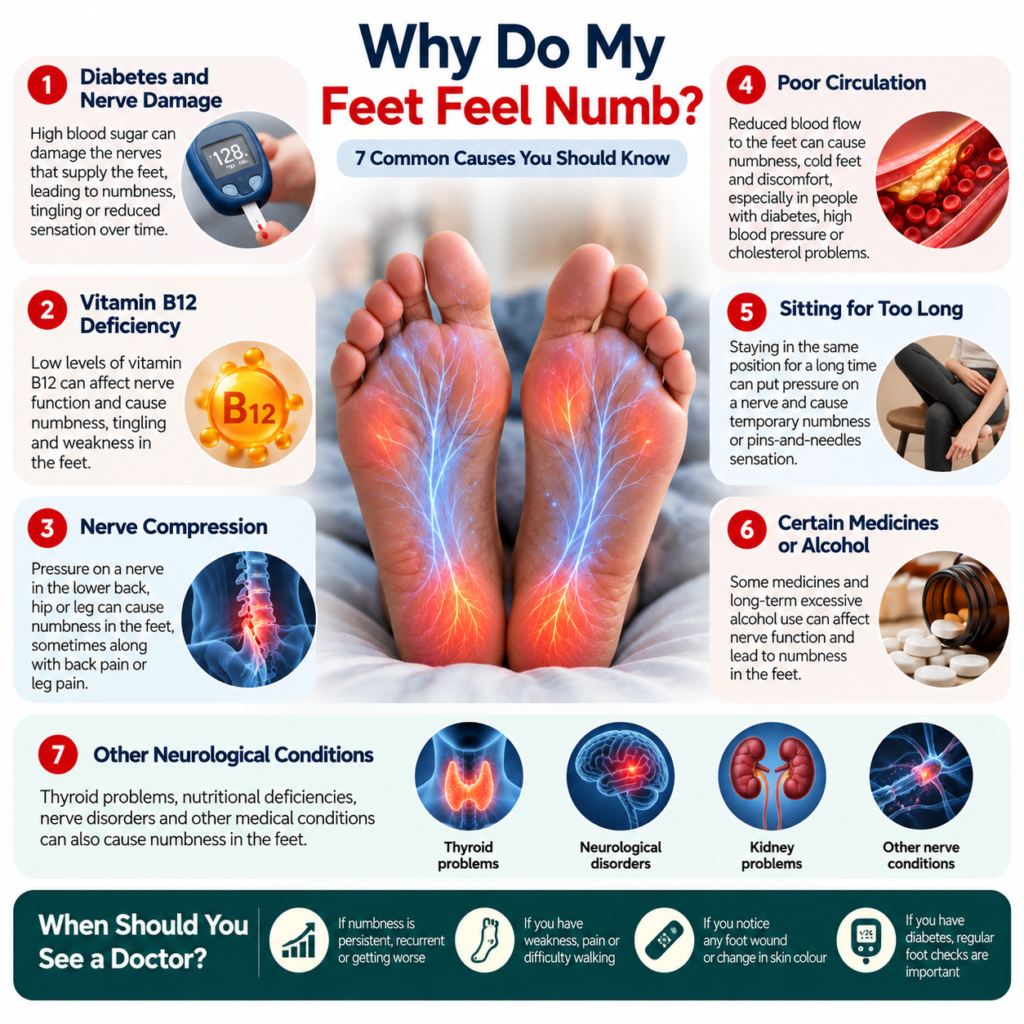
1. Diabetes and Nerve Damage
One of the important causes of persistent numb feet is diabetic peripheral neuropathy.
When blood sugar remains high for a long period, it can gradually damage the nerves that supply the feet. This is one reason it is important to understand the long-term effects of high blood sugar on the body.
People with diabetes should pay particular attention to changes in sensation because a small foot injury may go unnoticed when sensation is reduced.
Diabetes-related nerve damage, known as diabetic neuropathy, can cause numbness, tingling, burning and pain in the feet. The National Institute of Diabetes and Digestive and Kidney Diseases provides further information about this complication.
2. Vitamin B12 Deficiency
Vitamin B12 is important for healthy nerve function. When B12 levels are low, some people can develop numbness, tingling, burning sensations, weakness, or unusual sensations in their hands and feet.
If symptoms suggest a possible deficiency, your doctor may recommend a blood test rather than assuming that B12 is the cause.
3. Nerve Compression
A nerve can become compressed in the lower back, hip, or leg and produce numbness that extends into the foot.
Sometimes this occurs along with back pain, leg pain, or a sensation travelling down the leg.
The location and pattern of numbness can provide useful clues about the affected nerve.
If numbness is accompanied by tingling or burning, you may also want to understand the common causes of tingling feet and when these symptoms should be evaluated.
4. Poor Circulation
Reduced blood flow can sometimes contribute to discomfort or abnormal sensations in the feet.
You may also notice cold feet, changes in skin colour, leg pain while walking, or wounds that heal slowly.
This becomes particularly important in people who have diabetes, high blood pressure, or cholesterol problems.
5. Sitting in One Position for Too Long
Not every case of numbness indicates a medical disorder.
Sitting cross-legged or remaining in the same position for a long time can temporarily put pressure on a nerve. The numbness or pins-and-needles sensation usually improves after changing position and moving around.
6. Certain Medicines or Alcohol
Some medicines can affect nerve function. Long-term excessive alcohol consumption can also contribute to peripheral nerve damage.
If you suspect a prescribed medicine is causing your symptoms, do not stop it on your own. Discuss it with your physician.
7. Other Neurological Conditions
Several neurological conditions can affect sensation in the feet. Thyroid problems, nutritional issues, nerve disorders and other medical conditions may sometimes be involved.
This is why I would not recommend assuming that numb feet automatically mean diabetes or vitamin deficiency.
Several conditions can affect peripheral nerves and produce numbness, tingling or pain. The NHS guide to peripheral neuropathy explains some of these symptoms and causes.
When Should You See a Doctor?
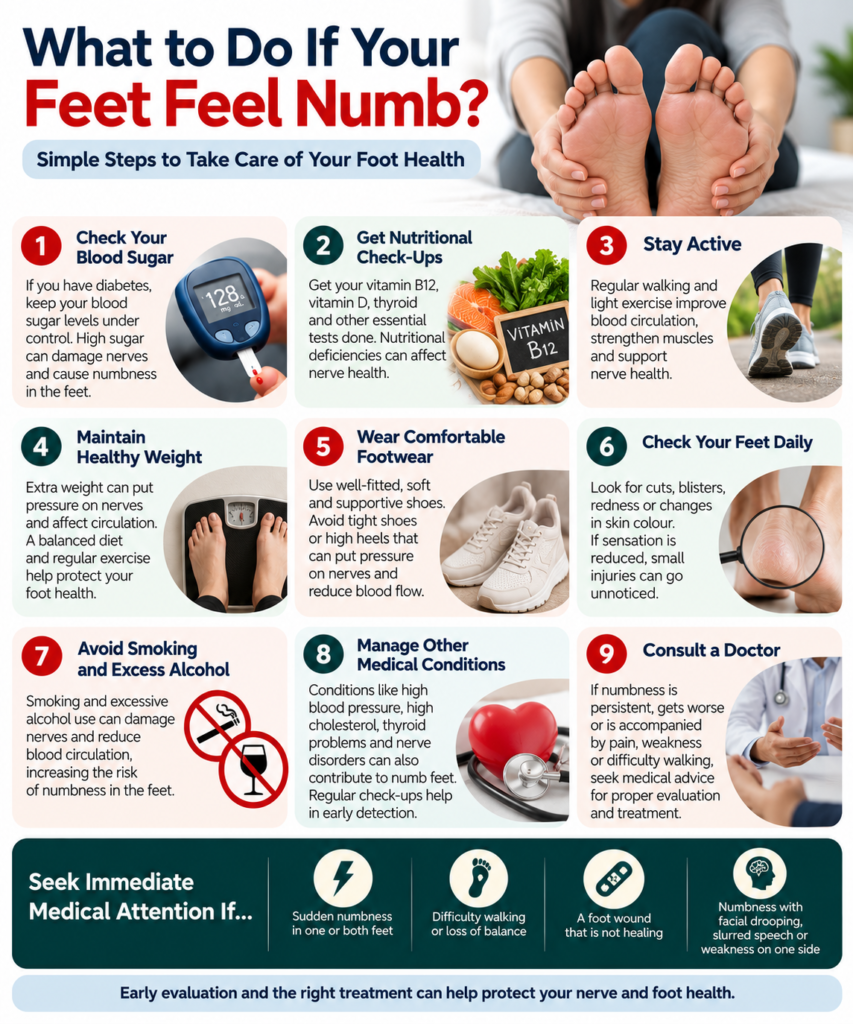
I recommend medical evaluation if numbness is persistent, recurrent, worsening, or associated with weakness, significant pain, balance problems, difficulty walking, or a foot wound.
Sudden numbness or weakness, particularly on one side of the body and accompanied by facial drooping or difficulty speaking, requires urgent medical attention.
My Advice as a Physician
Numbness is a symptom, not a diagnosis.
The important step is to identify the underlying cause. Depending on your symptoms and medical history, your physician may consider blood glucose/HbA1c, vitamin B12 and other appropriate investigations.
If your feet repeatedly feel numb, don’t simply ignore the sensation. Finding the cause early can help you take the right steps toward protecting your nerve and foot health.
Dr. Dileep Verma
Diabetologist & Physician
Safal Clinic & Wellness Center, Lucknow