Your HbA1c Report Is More Important Than a Single Blood Sugar Reading
Many patients visit my clinic with a common question:
“Doctor, my fasting sugar was normal today. Does that mean my Diabetes is under control?”
The answer is not always.
A single blood sugar reading only tells us what your glucose level was at that moment. To understand how well your Diabetes has been managed over the last few months, we need a more reliable marker.
That marker is the HbA1c test.
I am Dr. Dileep Verma, Diabetologist and Physician in Lucknow, and one of the most important tests I recommend for Diabetes patients is the HbA1c test because it provides a clearer picture of long-term blood sugar control.
What Is the HbA1c Test?
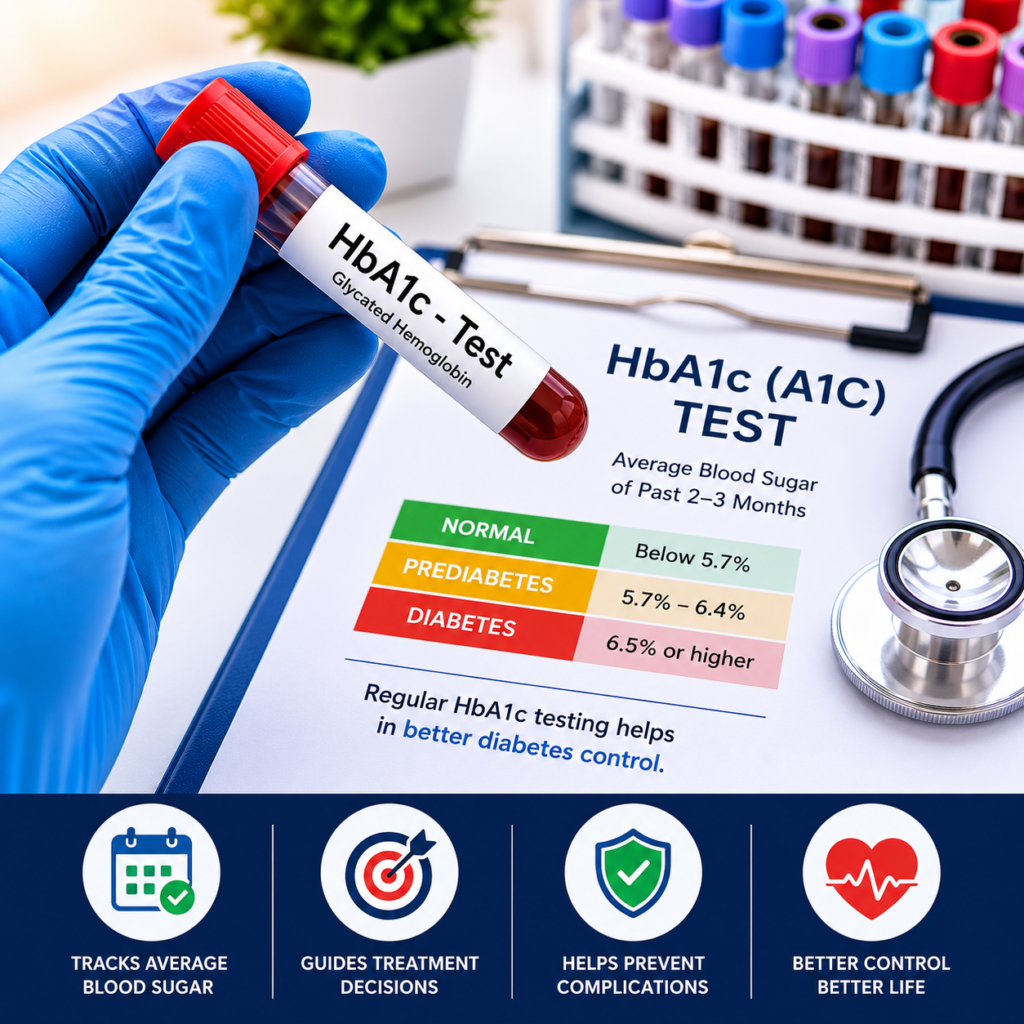
The HbA1c test, also known as the glycated hemoglobin test, measures the average blood sugar level over the previous 2–3 months.
When sugar circulates in your bloodstream, some of it attaches to hemoglobin, a protein found in red blood cells.
The higher your blood sugar remains over time, the higher your HbA1c level will be.
Unlike a fasting blood sugar test, HbA1c does not depend on what you ate that morning.
This makes it one of the most valuable diabetes tests for monitoring long-term glucose control.
Why Is HbA1c Important for Diabetic Patients?
Many people focus only on daily sugar readings.
However, Diabetes complications usually develop because of consistently elevated blood sugar levels over months and years.
Tracking HbA1c helps:
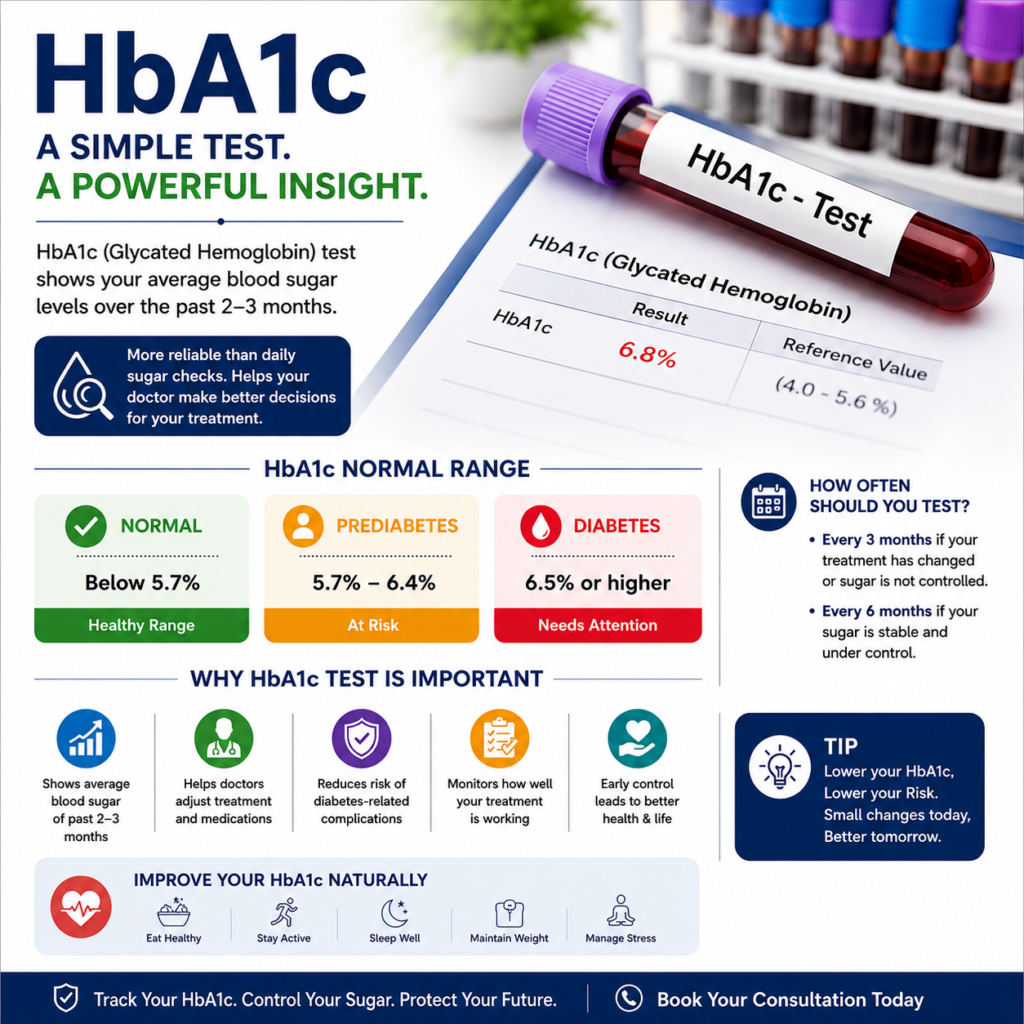
- Evaluate overall Diabetes control
- Assess treatment effectiveness
- Identify risks early
- Reduce long-term complications
- Guide medication and lifestyle decisions
According to the American Diabetes Association (ADA), HbA1c remains one of the most important tools for diagnosing and monitoring Diabetes.
What Is the Normal HbA1c Range?
Understanding your HbA1c normal range is essential.
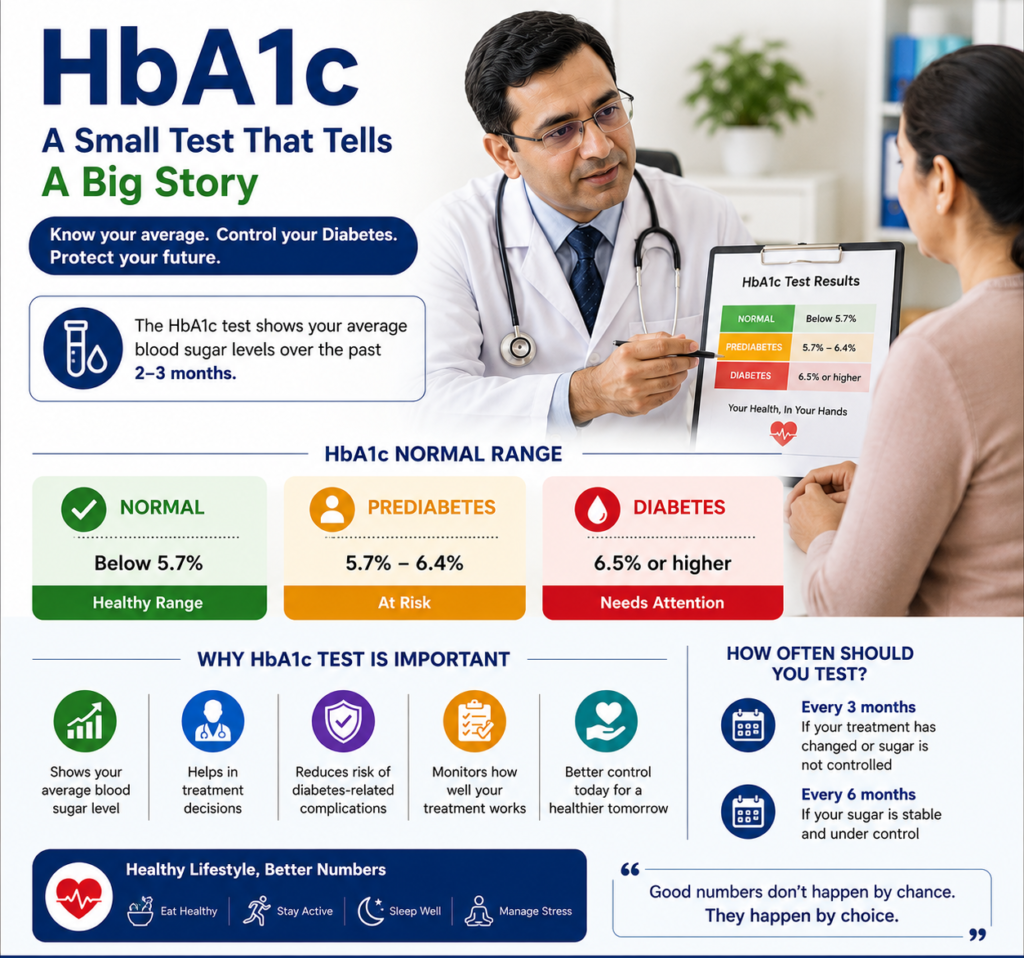
Normal
Below 5.7%
Prediabetes
5.7% to 6.4%
Diabetes
6.5% or higher
For many Diabetes patients, the treatment goal is often to maintain HbA1c below 7%, although targets may vary depending on age, health conditions, and individual circumstances.
Always discuss your personal target with your physician.
What Happens If HbA1c Remains High?
When HbA1c remains elevated for long periods, the risk of complications increases significantly.
Potential complications include:
- Heart disease
- Stroke
- Kidney disease
- Nerve damage
- Eye problems
- Poor wound healing
This is why monitoring HbA1c regularly is just as important as taking medications.
How Often Should You Get an HbA1c Test?
For most patients:
Every 3 Months
If:
- Blood sugar is uncontrolled
- Treatment has recently changed
- New Diabetes diagnosis
Every 6 Months
If:
- Blood sugar levels are stable
- Diabetes is well managed
Your doctor may recommend a different schedule based on your condition.
Can You Improve Your HbA1c Naturally?
Yes.
Many patients successfully improve their HbA1c through consistent lifestyle changes.
Focus on:
Healthy Eating
Choose:
- High-fiber foods
- Vegetables
- Lean protein
- Whole grains
Limit:
- Sugary beverages
- Processed foods
- Refined carbohydrates
Regular Physical Activity
Even a 30-minute daily walk can help improve insulin sensitivity and support better blood sugar control.
Quality Sleep
Poor sleep can negatively affect glucose metabolism and insulin function.
Weight Management
Even modest weight loss may improve HbA1c levels in many individuals with Type 2 Diabetes.
Common Mistakes Patients Make
As a diabetes doctor in Lucknow, I often see patients making these mistakes:
- Checking sugar frequently but ignoring HbA1c
- Stopping medications once sugar improves
- Skipping follow-up visits
- Following internet myths
- Ignoring diet and exercise
Remember, Diabetes management is about long-term consistency, not temporary improvements.
What Do Global Health Organizations Say?
The World Health Organization (WHO) emphasizes regular monitoring and effective blood sugar control to reduce the risk of Diabetes-related complications.
The Centers for Disease Control and Prevention (CDC) also recommends routine Diabetes monitoring and early intervention to improve long-term outcomes.
A Note from Dr. Dileep Verma
In my clinical practice, I often tell patients that HbA1c is like a report card for their Diabetes management. A normal fasting sugar on one day does not always mean blood sugar has been controlled over the last three months.
Tracking HbA1c regularly helps patients understand whether their current lifestyle and treatment plan are truly working.
Final Thoughts
The HbA1c test is one of the most important tools for monitoring Diabetes. It provides valuable information that a single blood sugar reading cannot.
If you are living with Diabetes or Prediabetes, understanding your HbA1c level can help you make informed decisions and reduce the risk of future complications.
If you have questions about your HbA1c report or Diabetes management plan, consult an experienced diabetologist in Lucknow for personalized guidance.