Getting a headache occasionally is common. But if you find yourself asking, “Why do I get headaches so often?”, it may be time to look beyond simply taking a painkiller.
Headaches can happen because of everyday factors such as dehydration, poor sleep, stress, or prolonged screen time. However, frequent headaches can sometimes be associated with migraine, vision problems, high blood pressure, medication overuse, or other medical conditions. Understanding the pattern of your headaches can help identify the possible cause.
As a physician in Lucknow, I recommend that patients with recurring headaches pay attention to when they occur, how long they last, and whether other symptoms appear alongside them.
8 Common Causes of Frequent Headaches

1. Stress and Tension
Stress is one of the most common triggers for headaches. Tension headaches may feel like a tight band or pressure around the forehead, temples, or back of the head.
Poor posture and prolonged muscle tension can make these headaches worse.
2. Dehydration
Not drinking enough fluids can contribute to headaches, particularly during hot weather, exercise, illness, or long working hours.
Make sure you drink enough water throughout the day rather than waiting until you feel very thirsty.
3. Poor Sleep
Too little sleep, irregular sleeping patterns, or poor-quality sleep can trigger recurring headaches. Maintaining a consistent sleep schedule can help reduce some types of headaches.
If you are also feeling tired or sleepy during the day, read: Why Am I Always Feeling Sleepy?
4. Migraine
Migraine is more than an ordinary headache. It may cause throbbing or pulsating pain, often on one side of the head, along with nausea or increased sensitivity to light and sound.
Certain foods, stress, hormonal changes, lack of sleep, and environmental triggers can contribute to migraine attacks.
5. Too Much Screen Time or Eye Strain
Spending long hours looking at computers and phones can contribute to eye strain and headaches. Poor lighting, incorrect screen distance, or an uncorrected vision problem may make symptoms worse.
Taking regular screen breaks and getting your vision checked when necessary can help.
6. Skipping Meals or Blood Sugar Changes
Going for long periods without eating may trigger headaches in some people. Blood sugar fluctuations can also contribute to weakness, sweating, shakiness, or headache.
This is particularly important for people with diabetes who take glucose-lowering medication.
7. High Blood Pressure
Very high blood pressure can sometimes be associated with headache, although ordinary headaches are not a reliable way to diagnose hypertension. High blood pressure often has no obvious symptoms.
Regular blood pressure monitoring is therefore more useful than assuming a headache means your BP is high.
For more information, read: 7 Warning Signs Your Blood Pressure May Be Too High
8. Frequent Use of Painkillers
Taking headache medication very frequently can sometimes contribute to medication-overuse headaches. This can create a cycle where headaches become more frequent and medication is taken more often.
If you regularly need painkillers for headaches, discuss this pattern with a physician instead of continuing self-medication.
When Should You Consult a Physician?
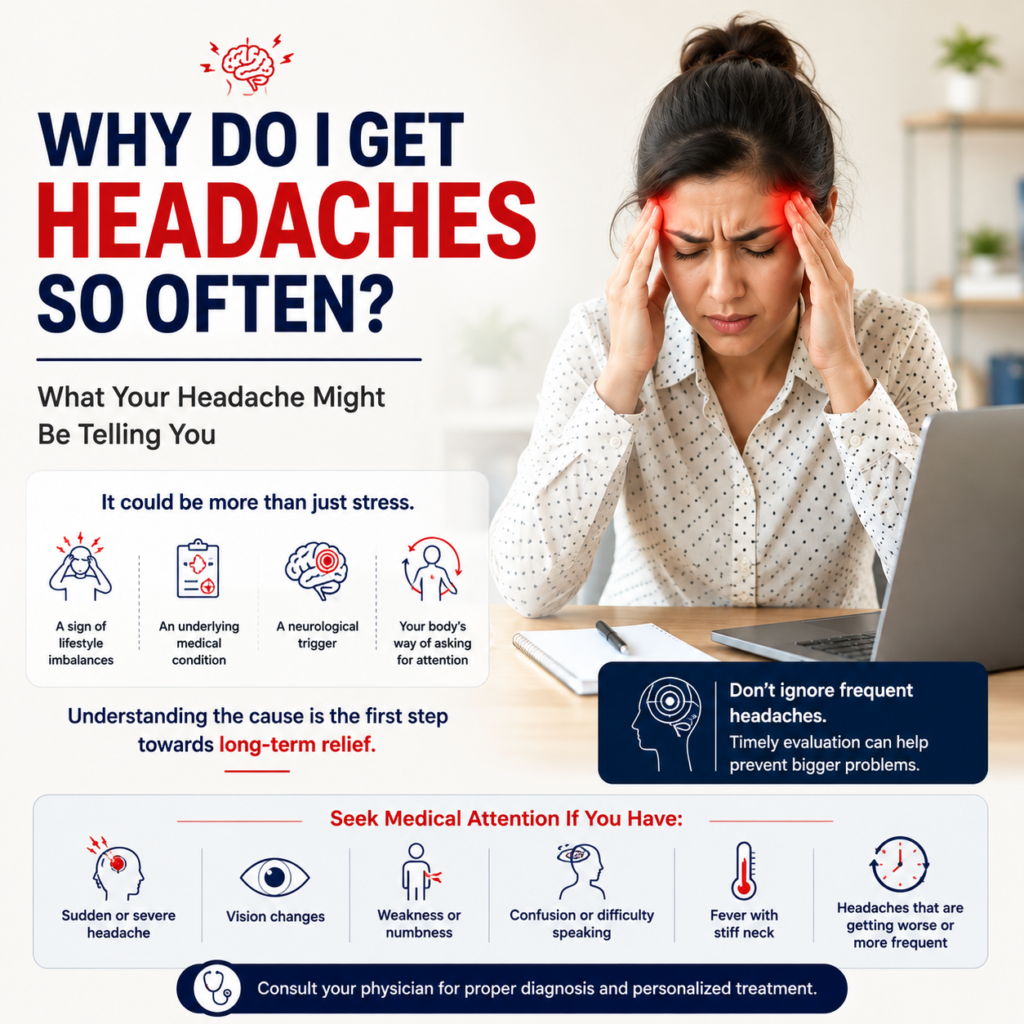
Not every headache is dangerous, but certain symptoms require urgent medical attention.
Seek immediate medical care if a headache:
- Starts suddenly and is extremely severe
- Occurs after a significant head injury
- Is accompanied by weakness, numbness, confusion, or difficulty speaking
- Occurs with loss of consciousness or seizures
- Is accompanied by fever and a stiff neck
- Causes new vision problems
- Is becoming progressively more frequent or severe
A physician may review your symptoms, blood pressure, medications, sleep, lifestyle, and medical history. Further investigations may be recommended depending on the clinical findings.
The NHS recommends medical assessment for headaches that are severe, recurrent, worsening, or associated with other concerning symptoms such as neurological changes or vision problems.
Frequently Asked Questions
How often is it normal to get a headache?
Occasional headaches are common. However, frequent, worsening, or unexplained headaches deserve medical evaluation.
Can dehydration cause headaches?
Yes. Inadequate fluid intake can contribute to headaches, particularly when accompanied by thirst, dark urine, weakness, or dizziness.
Can diabetes cause headaches?
Blood sugar that is too low or too high can sometimes contribute to headaches. People with diabetes should monitor glucose levels according to their doctor’s advice.
Should I check my blood pressure when I have a headache?
If you have access to a reliable blood-pressure monitor, checking your BP can provide useful information. However, don’t assume that every headache is caused by high blood pressure.
Final Thoughts
Frequent headaches can have many different causes, from stress and dehydration to migraine, sleep problems, blood sugar changes, and medication overuse. The key is to identify the pattern rather than repeatedly treating the symptom without understanding its cause.
If your headaches are becoming frequent, severe, or interfering with your daily life, consult a qualified physician for proper evaluation. If you are looking for the Best Physician in Lucknow for recurring headaches, diabetes, blood pressure, or other general health concerns, timely medical assessment can help determine the right approach.