Feeling bloated after a heavy meal is common. But if your abdomen feels full, tight, or uncomfortable almost every day, it may be worth paying attention to what your body is trying to tell you.
Bloating can be caused by something as simple as eating too quickly, but persistent bloating may also be related to constipation, food intolerance, digestive disorders, or certain lifestyle habits. As a physician in Lucknow, I often advise patients not to treat recurring digestive symptoms as “normal” without understanding the underlying cause.
If you are looking for the Best Physician in Lucknow for persistent digestive symptoms, identifying the pattern and possible triggers is an important first step.
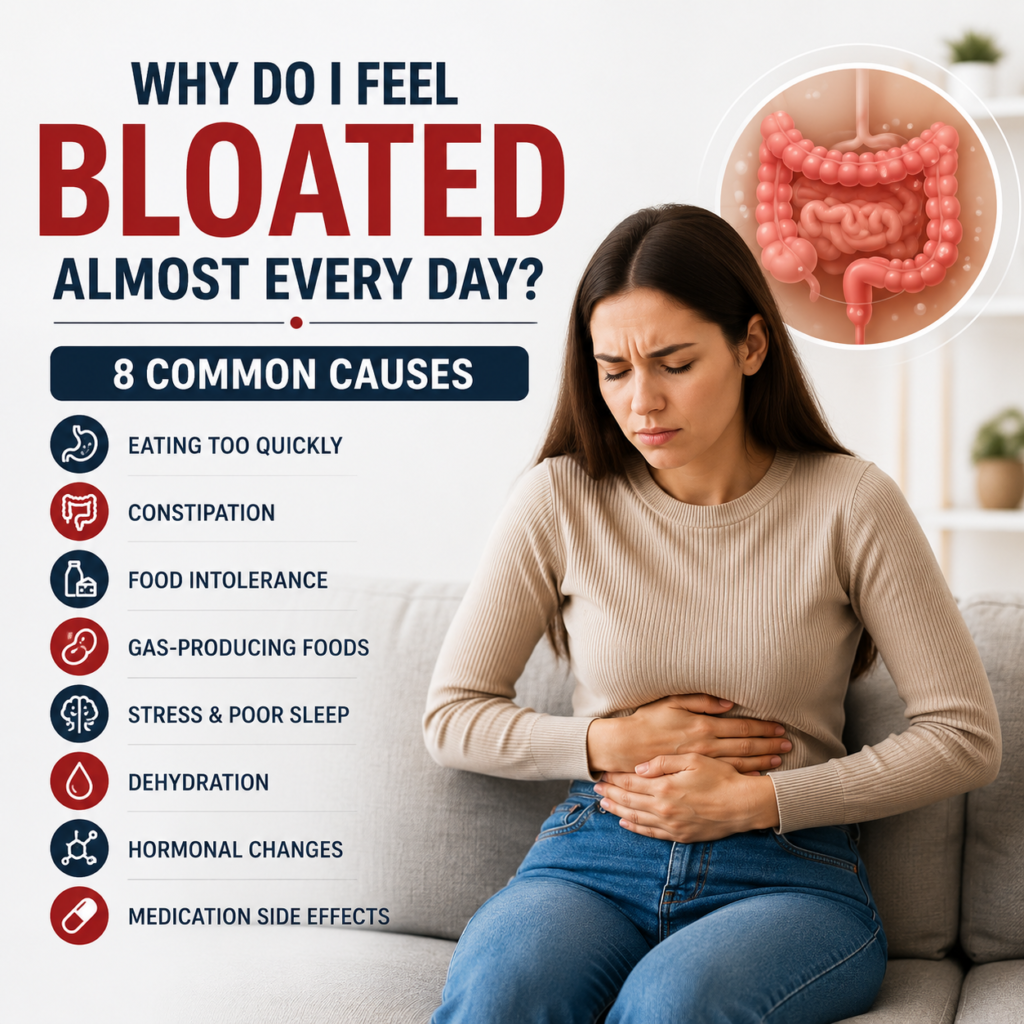
What Causes Bloating?
Bloating usually occurs when your digestive system contains excess gas or when digestion and movement of food through the gut are affected. The sensation can vary from mild fullness to significant abdominal discomfort.
1. Eating Too Quickly
Eating quickly can cause you to swallow more air. Large meals can also put extra pressure on the digestive system and make bloating more noticeable.
Try eating slowly, chewing food properly, and avoiding very large meals.
2. Constipation
When bowel movements become infrequent or difficult, stool can accumulate in the intestine and contribute to abdominal fullness and bloating.
Increasing dietary fibre gradually, drinking adequate fluids, and staying physically active may help.
3. Certain Foods
Some foods naturally produce more gas during digestion. Beans, lentils, onions, garlic, cabbage, and certain high-fibre foods can cause bloating in some people.
This doesn’t mean you need to eliminate these foods. Instead, observe whether particular foods consistently trigger your symptoms.
4. Food Intolerance
Some people have difficulty digesting certain foods, such as lactose-containing dairy products. This can result in bloating, gas, abdominal discomfort, or changes in bowel movements.
Keeping a simple food-and-symptom diary can help identify patterns.
5. Irritable Bowel Syndrome (IBS)
IBS is a common digestive condition associated with symptoms such as bloating, abdominal discomfort, constipation, diarrhoea, or changes in bowel habits. Symptoms can vary from person to person.
6. Carbonated Drinks
Soft drinks, sparkling water, and other carbonated beverages can increase the amount of gas in the digestive tract and may worsen bloating.
7. Stress and Poor Sleep
Your digestive system and brain are closely connected. Stress can affect gut movement and may worsen bloating and other digestive symptoms. Poor sleep can also influence how your body responds to stress and discomfort.
8. Hormonal Changes
Some people notice increased bloating around their menstrual period. Hormonal fluctuations can affect fluid retention and bowel movement, temporarily increasing the sensation of bloating.
IBS can cause recurring bloating along with abdominal discomfort, constipation, diarrhoea, or changes in bowel habits. The National Institute of Diabetes and Digestive and Kidney Diseases (NIDDK) provides additional information about digestive disorders and their symptoms.
When Should You Consult a Physician?
Occasional bloating is usually not concerning. However, persistent or worsening bloating deserves medical attention, particularly if it occurs with:
- Unexplained weight loss
- Blood in the stool
- Persistent vomiting
- Severe or worsening abdominal pain
- Fever
- Significant changes in bowel habits
- Loss of appetite
A physician can review your symptoms, diet, medications, medical history, and bowel habits to determine whether further tests are necessary.
Persistent bloating, particularly when accompanied by unexplained weight loss, blood in the stool, vomiting, or significant changes in bowel habits, should be medically evaluated. The NHS also recommends seeking medical advice when bloating is persistent or associated with concerning symptoms.

Frequently Asked Questions
Is bloating every day normal?
Occasional bloating is common, but daily or persistent bloating should not simply be ignored, especially if it is new, worsening, or accompanied by other symptoms.
Can constipation cause bloating?
Yes. Constipation can contribute to abdominal fullness and bloating because stool remains in the bowel for longer.
Can drinking water reduce bloating?
Adequate hydration can help prevent constipation and support normal digestion. However, persistent bloating may have another underlying cause and should be evaluated if it continues.
Should I stop eating foods that cause gas?
Not necessarily. Many nutritious foods can cause temporary gas. Instead of eliminating multiple foods without guidance, identify consistent triggers and discuss persistent symptoms with a healthcare professional.
Final Thoughts
Feeling bloated occasionally is common, but bloating almost every day deserves attention. Eating habits, constipation, food intolerance, IBS, stress, and hormonal changes are among the possible causes.
Rather than repeatedly taking over-the-counter remedies without knowing the cause, consider keeping track of your meals, bowel habits, sleep, and symptoms. If the problem continues or is accompanied by warning signs, consult a physician for proper evaluation.
If you are searching for the Best Physician in Lucknow for recurring digestive symptoms, timely medical evaluation can help identify the underlying cause and guide appropriate treatment.