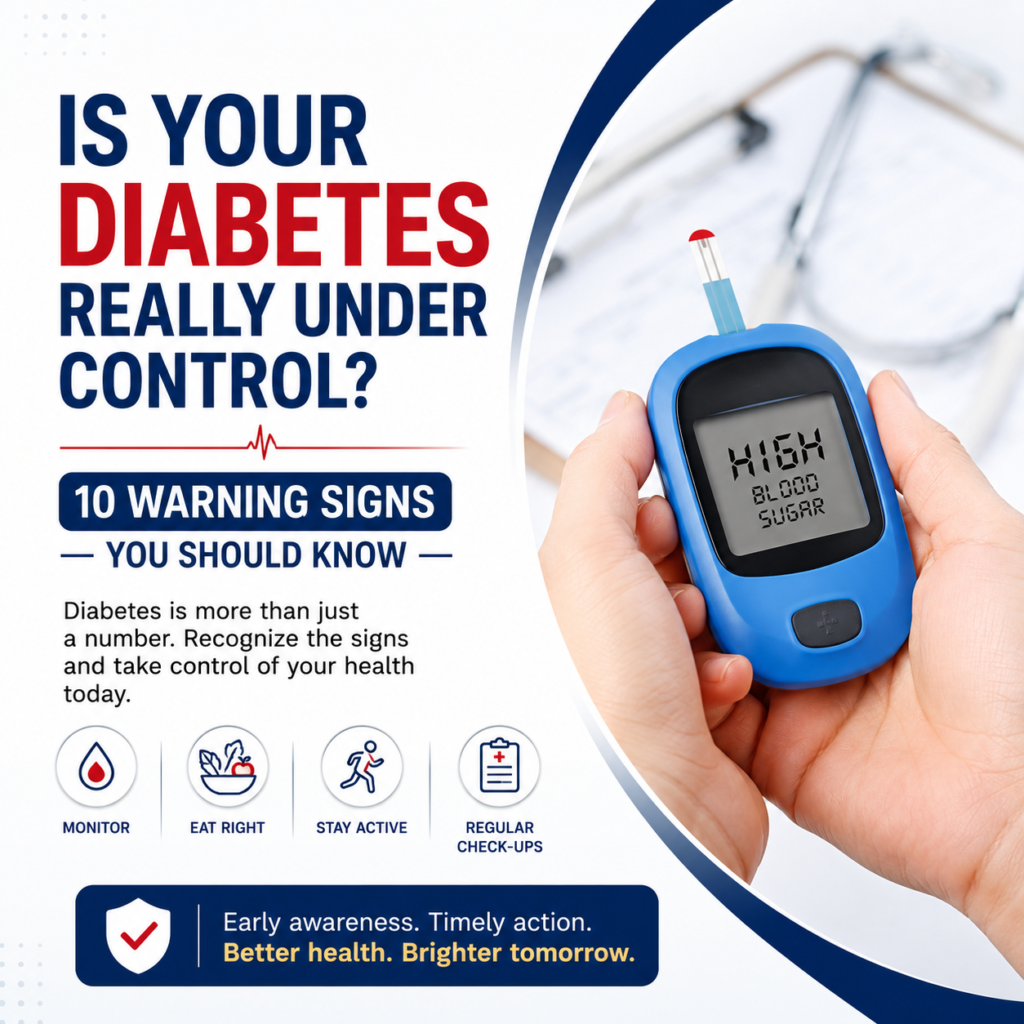
One of the most common things I hear from my patients is:
“Doctor, my blood sugar is normal today. That means my diabetes is under control, right?”
Not necessarily.
Diabetes management is much more than a single blood sugar reading. Many people focus only on their fasting or post-meal sugar levels while overlooking other important signs that their diabetes may not be adequately controlled.
In my clinical practice, I’ve observed that diabetes can quietly affect multiple systems in the body long before significant symptoms appear. That’s why recognizing early warning signs is so important.
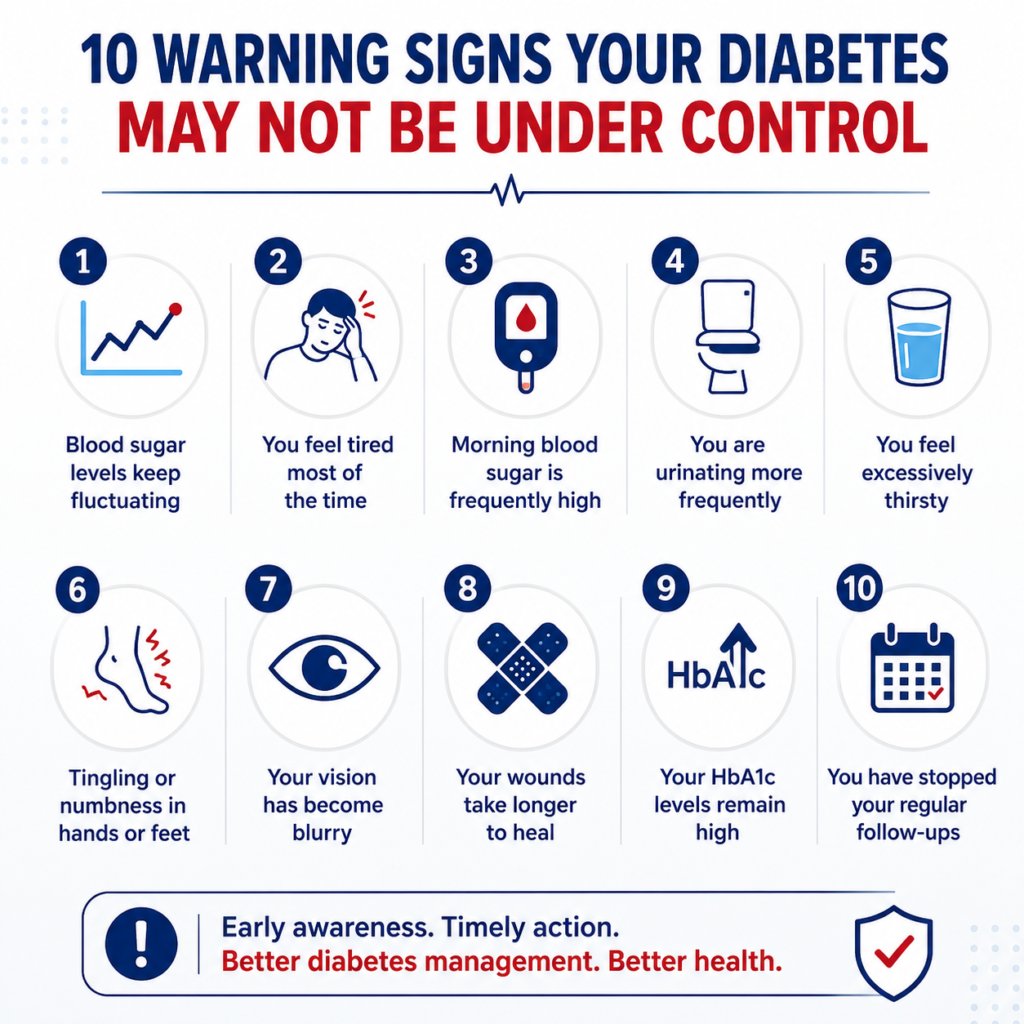
Here are ten signs that may indicate your diabetes needs closer attention.
1. Your Blood Sugar Levels Keep Fluctuating
If your blood sugar levels are frequently going up and down despite following your treatment plan, it may be time to review your diabetes management strategy.
Regular fluctuations can occur due to several factors, including dietary habits, physical activity, stress, sleep, or medication-related issues.
2. You Feel Tired Most of the Time
Persistent fatigue shouldn’t be ignored.
Many patients assume feeling tired is simply part of a busy lifestyle. However, uncontrolled blood sugar levels may sometimes affect your energy levels and overall well-being.
3. Your Morning Blood Sugar Is Frequently High
Is your fasting blood sugar consistently elevated despite following your treatment plan?
This may occur due to factors such as hormonal changes during the early morning hours or other underlying reasons that require medical evaluation.
Morning blood sugar levels deserve attention, especially when they remain elevated over time.
4. You Are Urinating More Frequently
Frequent urination, particularly at night, can sometimes indicate that blood sugar levels are not adequately controlled.
If this symptom is persistent or accompanied by excessive thirst, discussing it with your physician is advisable.
5. You Feel Excessively Thirsty
Persistent thirst may be another sign that deserves attention.
When blood glucose levels rise, the body may attempt to remove excess glucose through increased urination, which can contribute to dehydration and increased thirst.
6. Tingling or Numbness in Your Hands and Feet
Tingling, burning sensations, or numbness should never be ignored.
These symptoms may sometimes be associated with nerve-related complications of diabetes and should be evaluated promptly.
Early detection plays an important role in preventing further complications.
7. Your Vision Has Become Blurry
Diabetes can affect eye health over time.
If you notice changes in your vision or experience episodes of blurred vision, regular eye examinations become particularly important.
Protecting your eyesight is an essential part of comprehensive diabetes care.
8. Your Wounds Are Taking Longer to Heal
Slow-healing wounds or recurrent skin infections may indicate that your diabetes requires closer medical attention.
Even small cuts or injuries should be monitored carefully, especially in individuals living with diabetes.
9. Your HbA1c Levels Remain Above Your Target Range
Many patients monitor their daily blood sugar readings but forget about HbA1c.
HbA1c provides valuable information about your average blood sugar levels over the previous two to three months and is one of the most important tools for assessing long-term diabetes management.
Never rely on a single day’s blood sugar reading to determine whether your diabetes is under control.
Educational resources provided by the National Institute of Diabetes and Digestive and Kidney Diseases offer detailed information about diabetes monitoring and treatment.
10. You Have Stopped Your Regular Follow-ups
This is perhaps one of the most overlooked warning signs.
Many patients visit their physician only when their blood sugar levels increase significantly or symptoms become troublesome.
Diabetes management works best when it is proactive rather than reactive. Regular consultations, timely investigations, and periodic treatment reviews can help identify problems early and support better long-term outcomes.
Learn more about our Diabetes Management Program →
Diabetes Management Is More Than Sugar Control
One of the biggest misconceptions about diabetes is that managing it simply means lowering blood sugar levels.
Effective diabetes management involves much more than that. It includes:
- Regular medical consultations
- Blood sugar and HbA1c monitoring
- Personalized nutrition guidance
- Physical activity and weight management
- Regular screening for diabetes-related complications
- Timely follow-ups and treatment reviews
Looking at the bigger picture often makes the greatest difference in long-term diabetes care.
Final Thoughts
Diabetes doesn’t always announce that something is wrong. Sometimes, the earliest warning signs are subtle and easily overlooked.
If you’ve noticed one or more of these signs, don’t panic but don’t ignore them either. Early intervention and regular monitoring can play an important role in maintaining better health and reducing the risk of long-term complications.
Remember, diabetes management isn’t about chasing perfect numbers it’s about building sustainable habits and receiving the right medical guidance at the right time.
According to the World Health Organization, diabetes is a major global health concern, making early diagnosis and proper management particularly important for long-term health.
About the Author
Dr. Dileep Verma is a Physician & Diabetologist in Lucknow with over 22 years of clinical experience in diabetes and internal medicine. Through the Safal Diabetes Management Program, he follows an integrated approach combining physician care, diagnostics, personalized nutrition, and lifestyle guidance to help patients achieve better long-term diabetes management.