One question I hear very often from my patients is:
“Doctor, will I have to keep increasing my diabetes medicines throughout my life?”
It’s a genuine concern. Many people worry that once they start taking medicines for Type 2 Diabetes, the dosage will continue to increase over time.
The good news is that this isn’t always the case.
In many situations, better blood sugar control can be achieved through a combination of timely medical care, lifestyle modifications, personalized nutrition, and regular monitoring. However, it is important to understand that diabetes management is highly individual, and treatment decisions should always be made in consultation with your physician.
Diabetes Management Is More Than Medicines
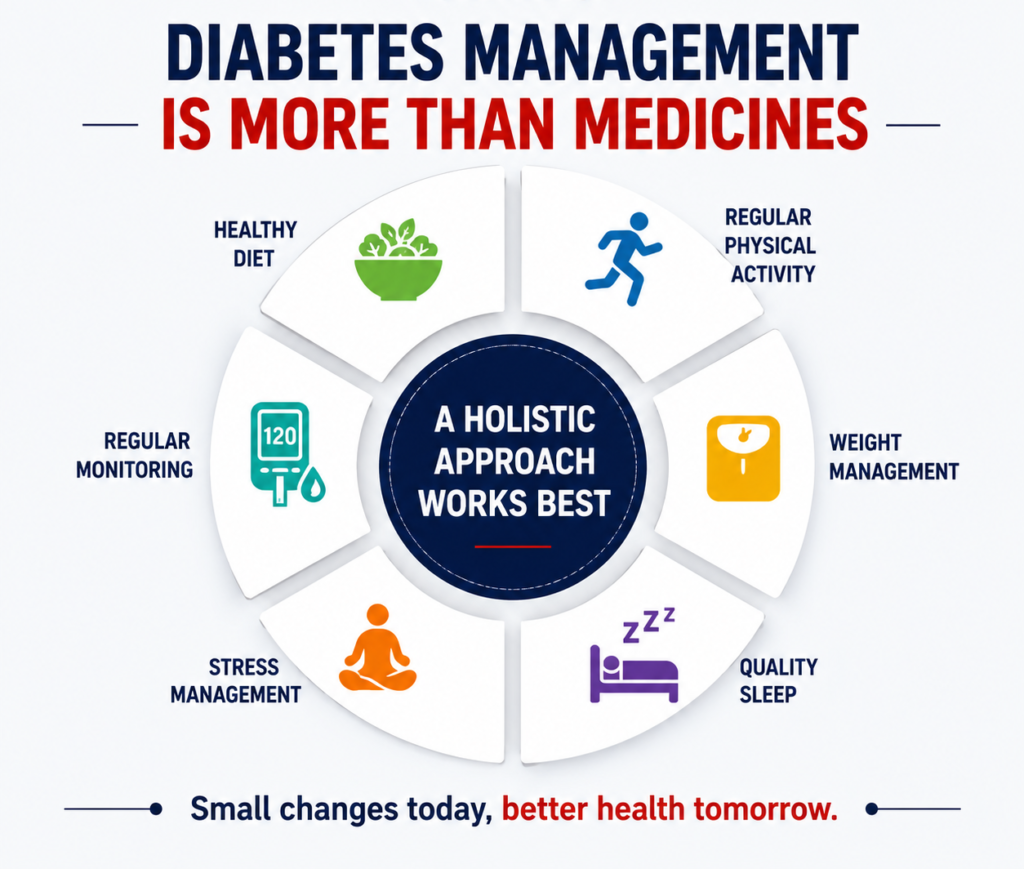
Medicines certainly play an important role in managing Type 2 Diabetes. However, they are only one part of the overall treatment plan. The American Diabetes Association (ADA) recommends that diabetes care should include medical nutrition therapy, physical activity, regular monitoring, and individualized treatment plans.
According to the World Health Organization (WHO), diabetes is one of the leading chronic diseases worldwide, and effective management requires timely diagnosis, regular monitoring, and appropriate medical care to help reduce the risk of long-term complications.
In my clinical practice, I often see patients focus entirely on medicines while overlooking other equally important factors such as:
- Physical activity
- Weight management
- Dietary habits
- Sleep quality
- Stress management
- Regular follow-ups
- Blood sugar and HbA1c monitoring
When these areas are neglected, achieving optimal blood sugar control may become more challenging.
Is It Possible to Avoid Increasing Medicines?
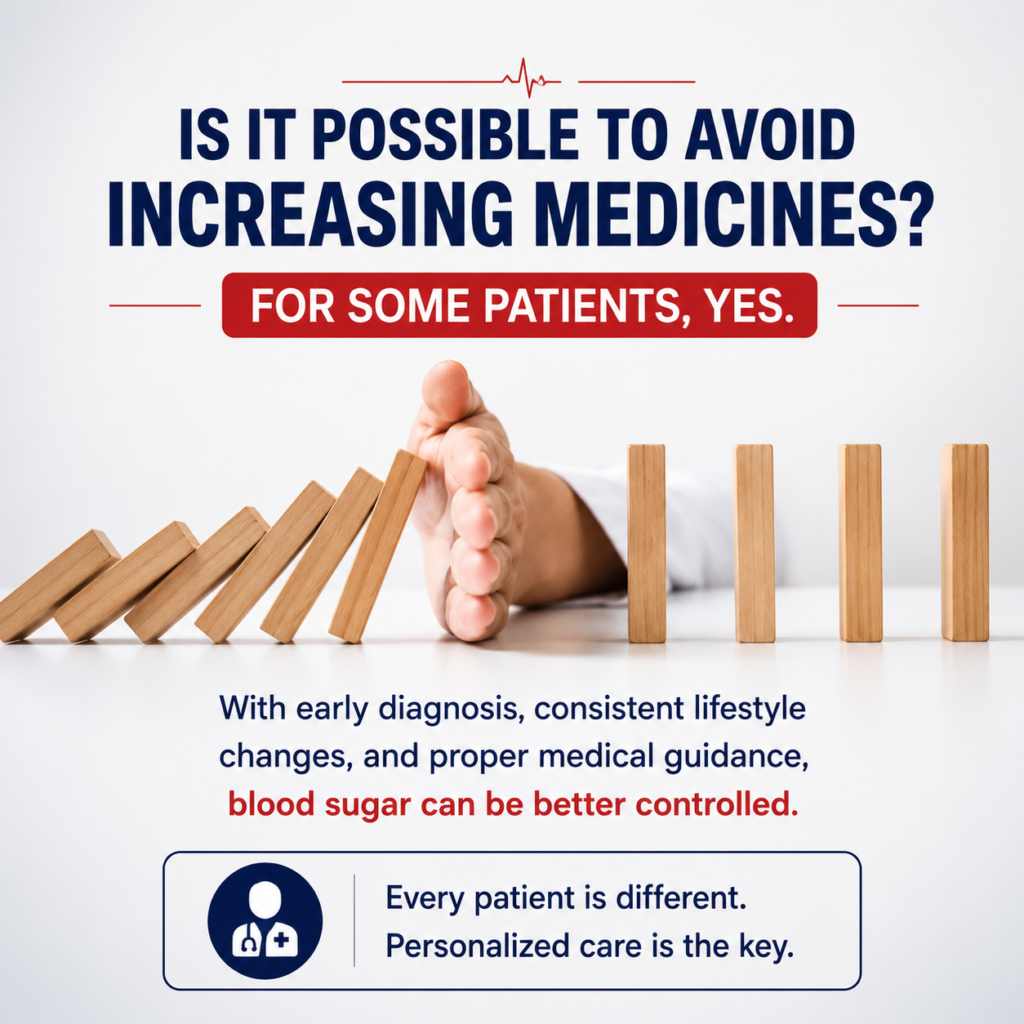
The answer is:
For some patients, yes.
If diabetes is identified early and managed effectively, some individuals may achieve their target blood sugar levels without requiring an increase in medication. Others may still require adjustments in their treatment plan over time.
There is no one-size-fits-all answer because every patient is different.
Factors that influence treatment decisions include:
- Duration of diabetes
- HbA1c levels
- Body weight
- Physical activity levels
- Existing medical conditions
- Kidney and liver health
- Risk of diabetes-related complications
This is why treatment plans should always be personalized rather than generalized.
Small Lifestyle Changes Can Make a Big Difference
Many patients underestimate the impact of daily habits on blood sugar levels.
Simple lifestyle measures such as:
- Walking regularly
- Following a balanced meal plan
- Maintaining a healthy weight
- Sleeping adequately
- Managing stress effectively
- Taking medicines as prescribed
can contribute significantly to better diabetes management.
These changes may also support treatment goals and improve overall health outcomes.
Why Regular Monitoring Matters
Managing diabetes isn’t just about checking your fasting blood sugar once in a while.
Regular monitoring may include:
- HbA1c testing
- Blood pressure monitoring
- Weight assessment
- Kidney function tests
- Eye examinations
- Foot examinations
- Medication reviews
These assessments help physicians understand whether diabetes is being managed effectively and whether any changes in treatment are required.
Don’t Wait for Medicines to Increase
One of the most common mistakes I see is patients delaying their follow-up visits until their blood sugar levels become significantly elevated.
Diabetes management works best when it is proactive rather than reactive.
Seeking timely medical advice and making sustainable lifestyle changes can help patients take better control of their overall health.
Final Thoughts
Type 2 Diabetes should not be viewed solely through the lens of medicines. Effective diabetes management involves understanding how your lifestyle, nutrition, regular monitoring, and medical care work together.
For some patients, better diabetes control may be achieved without increasing medicines, while others may require treatment adjustments based on their individual needs. The goal is never simply to prescribe more medicines it is to achieve better and safer long-term health outcomes.
Every patient’s journey with diabetes is unique, which is why personalized care remains so important.
About the Author
Dr. Dileep Verma is a Physician & Diabetologist in Lucknow with over 22 years of clinical experience in diabetes and internal medicine. Through the Safal Diabetes Management Program, he follows an integrated approach that combines physician care, diagnostics, personalized nutrition, and lifestyle guidance to help patients achieve better long-term diabetes control.