“Doctor, I often feel a tingling sensation in my feet, almost as if pins and needles are pricking my skin. Is it because of diabetes?”
This is a common concern I hear from patients. Occasional tingling can happen when you sit in one position for too long or put pressure on a nerve. But if the sensation keeps coming back, lasts for a long time, or gradually gets worse, it is important to find out why.
Diabetes is one possible cause, but it is certainly not the only one.
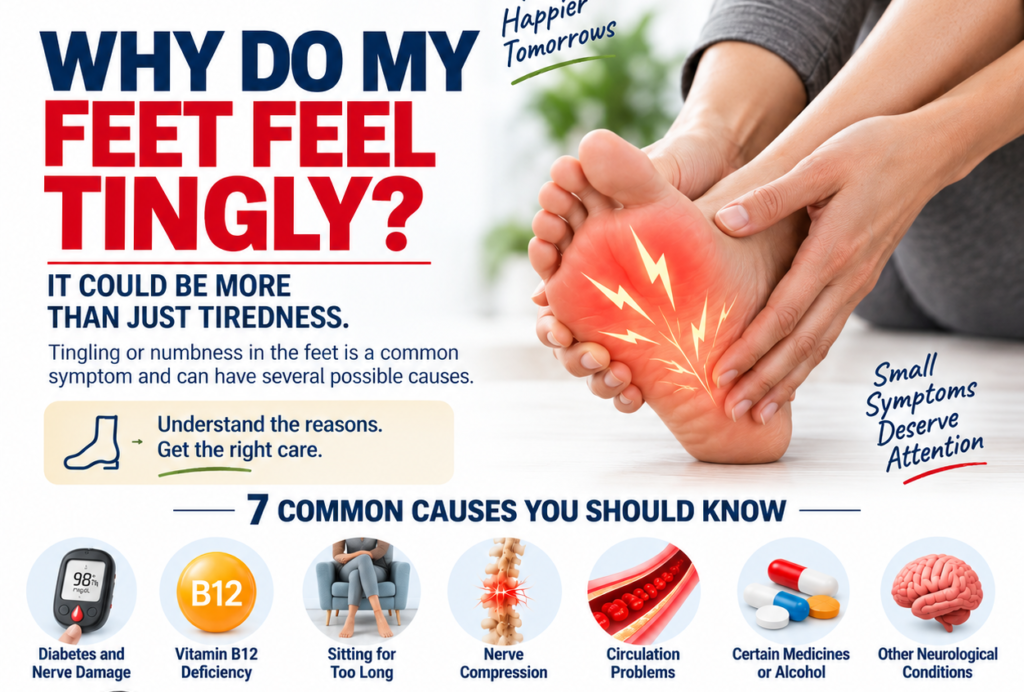
1. Diabetes and Nerve Damage
Persistently high blood sugar can damage nerves over time. This condition is called diabetic peripheral neuropathy.
It commonly affects the feet and legs and may cause tingling, burning, numbness, increased sensitivity, or pain. Symptoms often develop gradually and may affect both feet.
If you have diabetes and regularly experience these symptoms, don’t focus only on your blood sugar readings. Your nerve health and feet should also be evaluated.
If blood sugar remains elevated for a long time, it can affect different parts of the body, including the nerves. You can also read about the long-term effects of high blood sugar to understand these complications better.
Diabetes-related nerve damage, also called diabetic neuropathy, can cause tingling, numbness, burning or pain in the feet.
2. Vitamin B12 Deficiency
Vitamin B12 plays an important role in maintaining healthy nerves. A deficiency can cause tingling or numbness in the hands and feet, along with weakness or fatigue.
If your symptoms are persistent, your physician may recommend a blood test to check your B12 level depending on your medical history.
3. Sitting in One Position for Too Long
Have you ever felt your foot “fall asleep” after sitting awkwardly?
Pressure on a nerve can temporarily cause numbness or tingling. Usually, the sensation improves after changing position and restoring normal nerve function.
However, frequent episodes without an obvious positional cause deserve attention.
4. Nerve Compression
A nerve can become compressed in the lower back, hip, or leg and cause sensations that travel down into the foot.
If tingling is accompanied by back pain or pain travelling from your back into your leg, a nerve-related problem may need to be evaluated.
5. Circulation Problems
Reduced blood circulation can sometimes cause symptoms in the legs and feet.
You may notice cold feet, changes in skin colour, leg pain while walking, or wounds that heal slowly.
People with diabetes, high blood pressure or high cholesterol should pay particular attention to their circulation and foot health.
6. Certain Medicines or Alcohol
Some medications can affect nerve function, while long-term excessive alcohol consumption can also contribute to nerve damage.
If your tingling started after beginning a new medicine, discuss it with your doctor. Do not stop a prescribed medicine without medical advice.
7. Other Neurological Conditions
Not every case of tingling is caused by diabetes or vitamin deficiency. Certain neurological conditions can also affect sensation in the feet.
This is why persistent tingling should not be self-diagnosed.
Several conditions can affect peripheral nerves and lead to symptoms such as tingling or numbness. This is broadly referred to as peripheral neuropathy.

When Should You See a Physician?
I recommend medical evaluation if tingling:
- Happens frequently
- Is becoming progressively worse
- Causes persistent numbness
- Is associated with weakness
- Affects your balance or walking
- Causes significant pain
- Occurs with a foot wound or ulcer
Sudden numbness or weakness on one side of the body, particularly with difficulty speaking, facial drooping, or severe dizziness, requires urgent medical attention.
My Advice as a Physician
If your feet tingle occasionally after sitting awkwardly, there may be little reason for concern.
But if the sensation is persistent or recurring, don’t automatically assume that you need calcium or that diabetes is the cause.
Your physician may consider your medical history and, when appropriate, check blood glucose, HbA1c, Vitamin B12 and other relevant tests to identify the underlying cause.
The goal is not simply to treat the tingling. The goal is to find out why it is happening.
Dr. Dileep Verma
Diabetologist & Physician
Safal Clinic & Wellness Center, Lucknow