As a physician, one of the most important things I explain to my patients with diabetes is that high blood sugar is not just a number on a glucometer. When glucose remains elevated for a long time, it can gradually affect the blood vessels, nerves and organs throughout the body.
The concerning part is that these changes may begin without obvious symptoms. That is why regular monitoring and timely diabetes management are so important.
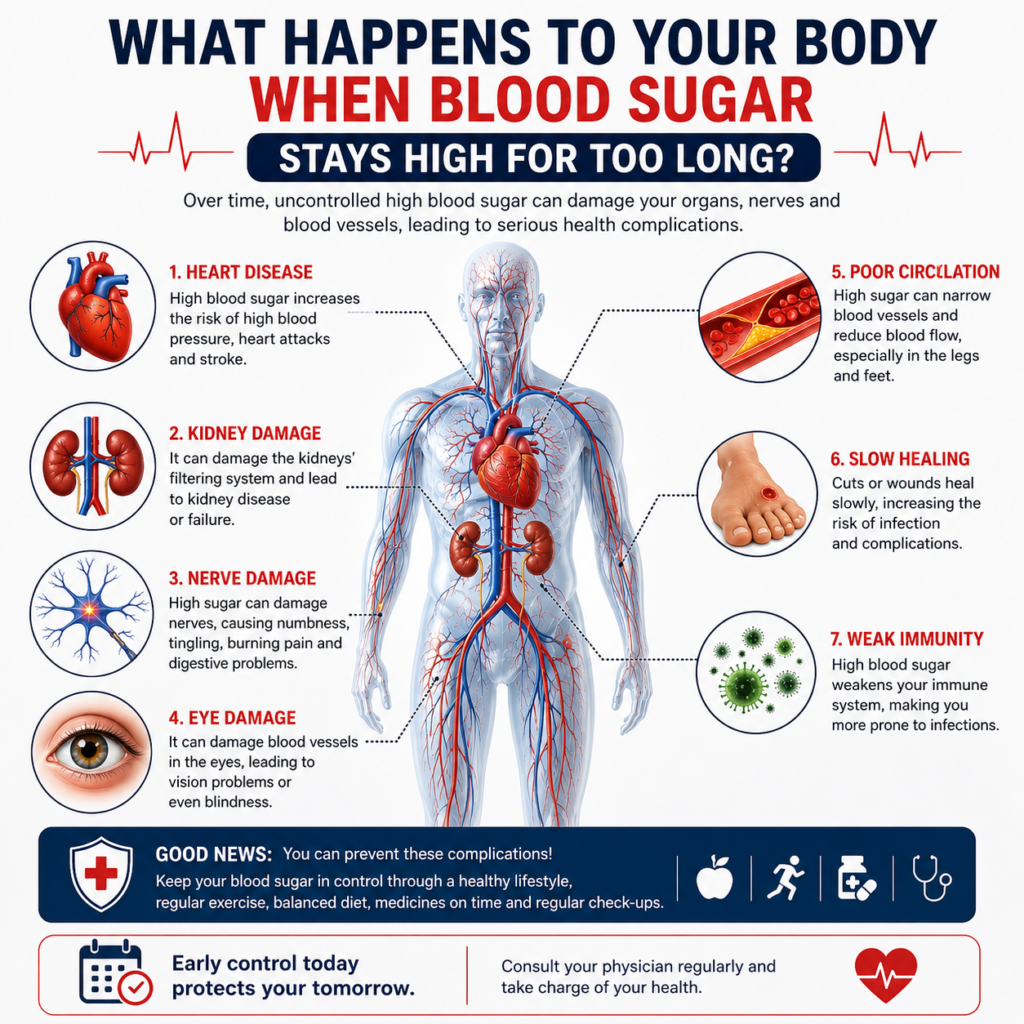
1. Your Blood Vessels Can Be Damaged
Persistently high blood sugar can damage the lining and small blood vessels throughout the body. Over time, this can interfere with healthy circulation and contribute to complications affecting different organs.
The longer diabetes remains poorly controlled, the greater the concern about long-term complications.
2. Your Heart and Blood Vessels Are at Greater Risk
Diabetes is associated with an increased risk of cardiovascular disease. High blood sugar can occur alongside high blood pressure, abnormal cholesterol and other metabolic problems, increasing the risk of heart disease and stroke.
This is why diabetes management should never focus only on glucose levels. Blood pressure, cholesterol, weight and lifestyle also matter.
3. Your Kidneys Can Be Affected
Your kidneys filter waste from your blood. Over time, high blood sugar can damage the tiny blood vessels involved in this filtering process, potentially leading to diabetic kidney disease.
Early kidney damage may have no noticeable symptoms. Tests such as urine albumin-to-creatinine ratio and eGFR can help detect kidney problems earlier.
4. Your Nerves May Become Damaged
Persistently high glucose can affect nerves, particularly those in the feet and hands. Some people experience tingling, burning, numbness or reduced sensation.
Reduced sensation can also make it easier to overlook a small cut or wound on the foot, which is why regular foot checks are important for people with diabetes.
5. Your Eyes Can Be Affected
High blood sugar can damage the small blood vessels in the retina and contribute to diabetic retinopathy.
Vision changes should not be ignored. Regular eye examinations are important for people with diabetes, even when their vision appears normal.
6. Wounds May Take Longer to Heal
Diabetes can affect circulation and nerve function. Together, these problems can make wounds—particularly on the feet more difficult to notice and slower to heal.
Any wound that is not healing normally should be assessed by a medical professional.
7. Your Body May Become More Vulnerable to Infections
Poorly controlled diabetes can affect the body’s ability to respond effectively to infections. Some people may experience recurring skin, urinary or other infections.
Frequent infections should be discussed with your physician rather than simply treated repeatedly without investigating possible underlying factors.
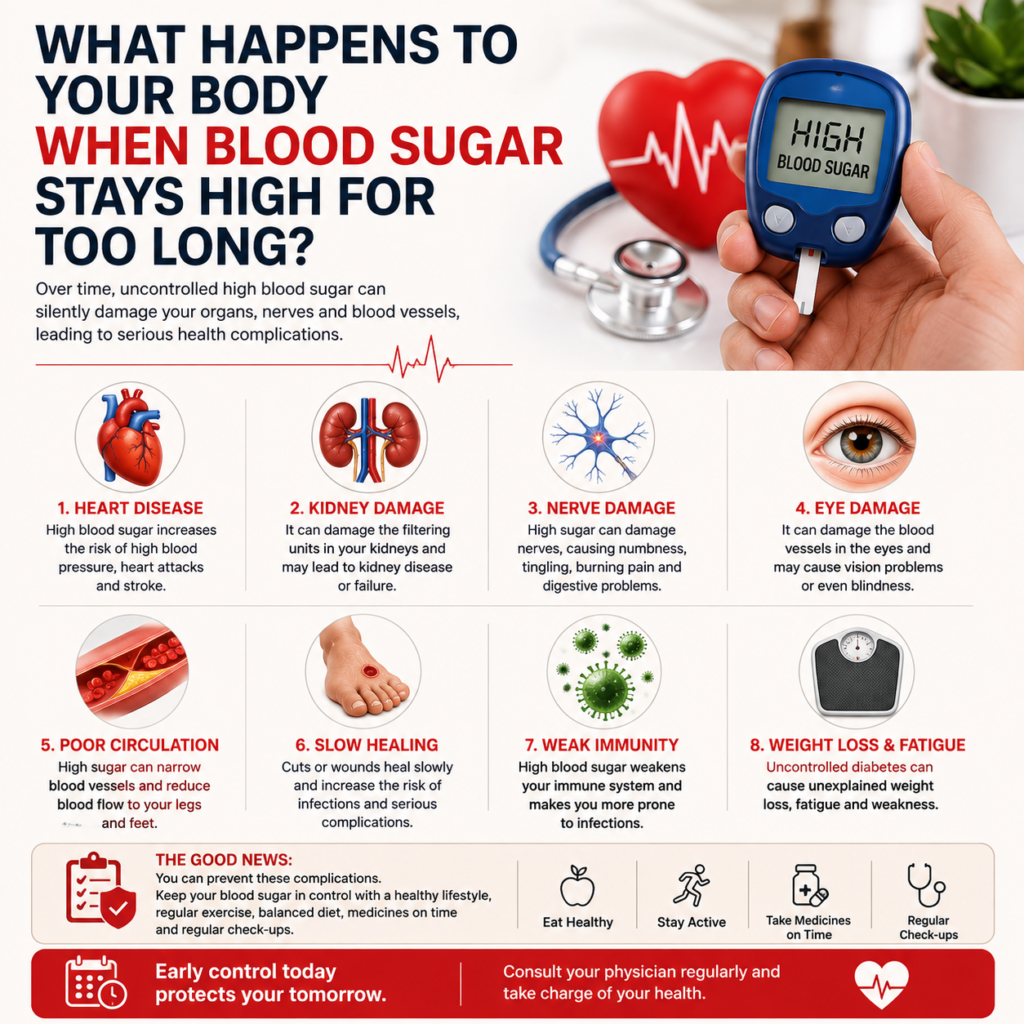
What Can You Do?
The good news is that managing diabetes is about much more than chasing a single glucose reading.
Work with your doctor to develop an appropriate plan for blood sugar, blood pressure and cholesterol management. Regular physical activity, a balanced diet, maintaining a healthy weight, adequate sleep and taking prescribed medicines correctly can all contribute to better long-term health.
Most importantly, don’t wait until you develop symptoms before getting checked. Regular monitoring can help identify problems while there is still an opportunity to address them.
Regular physical activity, a balanced diet, maintaining a healthy weight and appropriate diabetes management can all contribute to better long-term health.
Source- https://www.cdc.gov/diabetes/living-with/index.html
My Advice as a Physician
I often remind my patients that diabetes complications usually develop over time they don’t appear overnight.
That means there is an opportunity to act.
If your blood sugar has been consistently high, don’t ignore it simply because you feel well. Discuss your readings with your physician and understand what may be causing them.
Controlling blood sugar today is not only about today’s reading. It is about protecting your heart, kidneys, eyes, nerves and overall health for the years ahead.
Dr. Dileep Verma
Diabetologist & Physician
Safal Clinic & Wellness Center, Lucknow