“Doctor, I eat a proper meal, but soon after eating, I start craving something sweet. I feel like I need chocolate, biscuits or dessert every day. Why does this happen?”
This is a very common complaint. An occasional craving for something sweet is normal. But if you regularly want sweets after almost every meal, it is worth looking at your eating pattern, sleep, stress, activity level and overall health.
A sweet craving by itself does not mean that you have diabetes. However, when it occurs with other symptoms, it may be worth investigating.
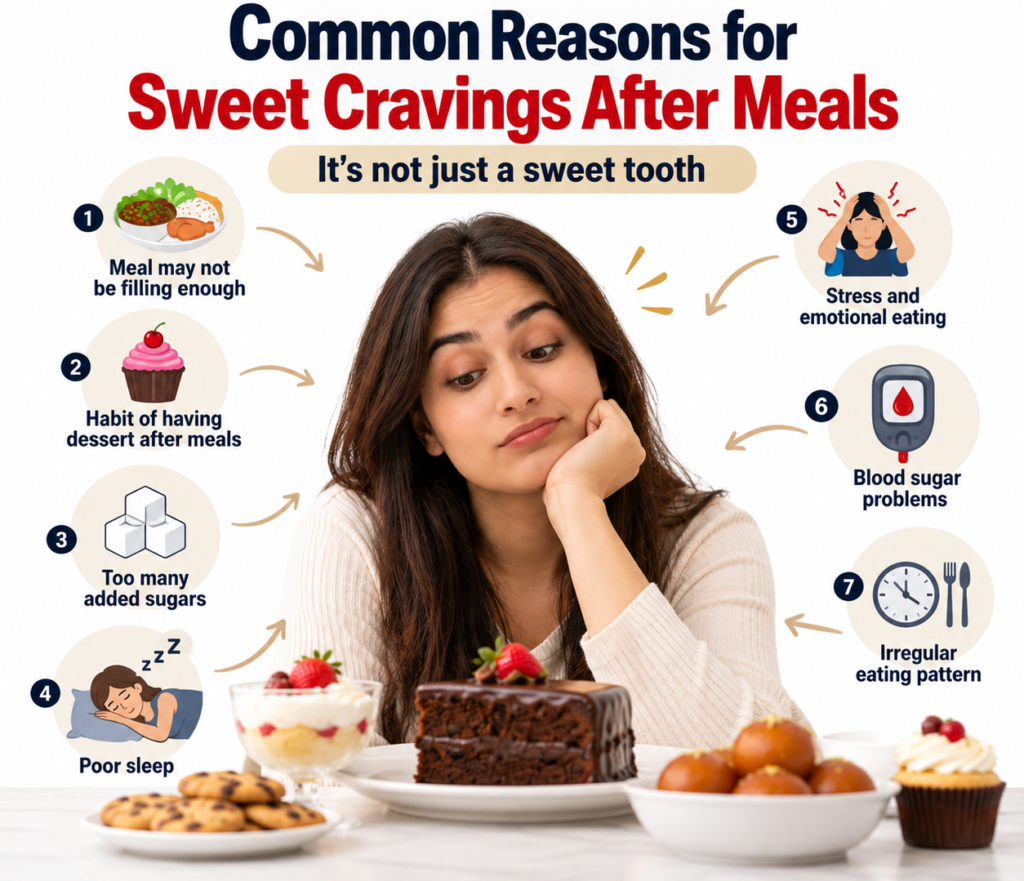
Here are seven possible reasons I commonly consider.
1. Your Meal May Not Be Filling Enough
If your meal contains a lot of refined carbohydrates but not enough protein, fibre and healthy fats, you may not feel satisfied for very long.
For example, a meal based mainly on refined flour, white rice or other rapidly digested carbohydrates may leave you wanting more food soon afterward.
If you also find yourself feeling hungry shortly after eating, read about why you may feel hungry even after eating.
A balanced plate containing vegetables, an appropriate protein source, whole grains and sensible portions can help improve satiety.
2. You’ve Made Dessert Part of Your Routine
Sometimes the craving is more about habit than hunger.
If you regularly finish lunch or dinner with something sweet, your brain can begin to associate the end of a meal with dessert.
Over time, you may automatically look for something sweet even when you are physically satisfied.
Try changing the routine gradually rather than feeling that you have to completely eliminate sweets overnight.
3. You Eat Too Many Added Sugars
Regular consumption of sweets, sweetened beverages, biscuits, packaged snacks and other foods containing added sugars can make sweet foods a frequent part of your diet.
The American Heart Association’s guidance on added sugars provides useful information about added sugar intake and healthier eating choices.
The goal isn’t necessarily to never eat something sweet. It is to avoid making added sugar a routine part of every meal.
4. Poor Sleep Can Increase Food Cravings
Your sleep and appetite are closely connected.
When you regularly sleep poorly, you may notice stronger cravings for high-calorie, sugary or carbohydrate-rich foods.
So if you are tired throughout the day and constantly reaching for sweets, don’t look at your diet alone. Your sleep pattern also deserves attention.
Improving sleep, maintaining regular meal times and staying physically active can make it easier to manage cravings.
5. Stress and Emotional Eating
Stress is another common reason people reach for sweets.
Some people eat sugary foods when they are stressed, bored, anxious or emotionally exhausted. Sweet foods may provide temporary comfort, which can reinforce the habit.
If you notice that your cravings become stronger during stressful periods, try identifying the trigger rather than simply blaming yourself for lacking willpower.
6. Blood Sugar Problems
Frequent sweet cravings do not automatically mean you have diabetes.
However, if cravings occur along with increased thirst, frequent urination, unusual tiredness, unexplained weight changes or blurred vision, it is sensible to discuss them with a physician.
The CDC’s guide to diabetes symptoms explains some of the common symptoms associated with diabetes.
If there are appropriate risk factors or symptoms, your physician may recommend blood glucose testing and an HbA1c test.
You can also learn more about the long-term effects of high blood sugar on the body.
7. Your Overall Eating Pattern May Need Attention
Skipping meals, eating very irregularly, severely restricting food or relying heavily on processed foods can make cravings harder to manage.
Instead of focusing only on eliminating sweets, look at your entire eating pattern.
Try to have regular, balanced meals containing adequate protein, vegetables, fibre and appropriate portions of carbohydrates.
When Should You See a Doctor?
A sweet craving on its own is usually not a reason to panic.
However, speak with a physician if frequent cravings occur along with:
- Excessive thirst
- Frequent urination
- Unexplained weight loss or gain
- Persistent fatigue
- Blurred vision
- Increased hunger
- Other unusual symptoms
If you have a family history of diabetes, are overweight, have high blood pressure or have previously had abnormal blood sugar, discussing your risk with a physician may also be worthwhile.
My Advice as a Physician
Don’t assume that every sweet craving means you have diabetes.
In many people, cravings are related to eating habits, meal composition, poor sleep or stress. But persistent cravings accompanied by other symptoms should not simply be ignored.
Instead of asking only, “How can I stop craving sweets?”, ask “Why am I craving them so frequently?”
Start with balanced meals, adequate sleep, regular physical activity and moderation of added sugars. If you also have symptoms or diabetes risk factors, get your blood sugar checked rather than guessing.
If frequent sweet cravings are accompanied by excessive thirst, frequent urination, unexplained weight changes or persistent fatigue, it may be worth checking your blood sugar. Consulting an experienced diabetologist in Lucknow can help determine whether further evaluation is needed.
Dr. Dileep Verma
Diabetologist & Physician in Lucknow
Safal Clinic & Wellness Center, Lucknow