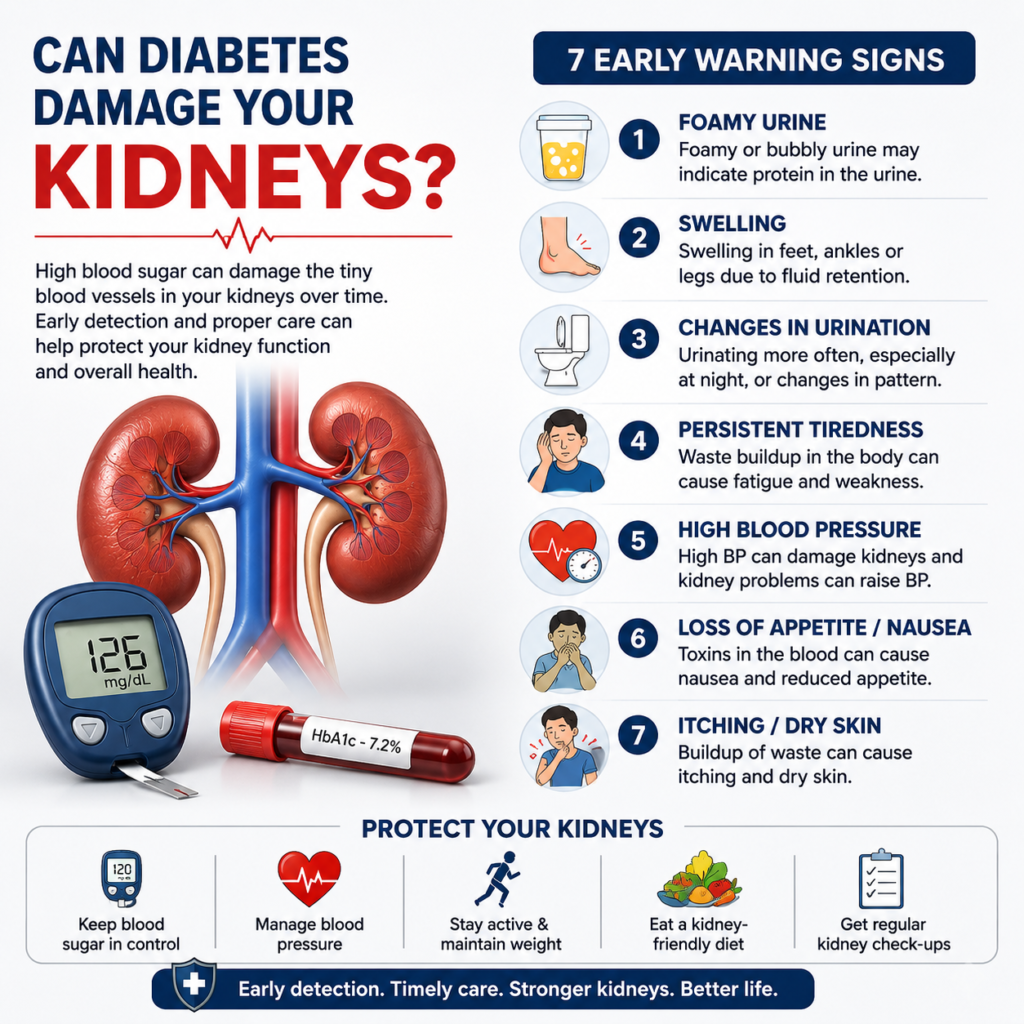
As a physician, one question I frequently hear from people with diabetes is: “Doctor, can diabetes damage my kidneys even if I feel completely fine?”
Yes. Diabetes is one of the important risk factors for chronic kidney disease. The concern is that kidney damage can develop gradually without noticeable symptoms. That is why regular screening is more important than waiting for warning signs.
When blood sugar remains high over a long period, it can damage the tiny blood vessels and filtering units inside the kidneys. This condition is commonly called diabetic kidney disease.
The good news is that early detection and proper management of diabetes and blood pressure can help slow the progression of kidney damage.
7 Signs You Shouldn’t Ignore
1. Foamy or Bubbly Urine
Persistent foaminess in urine can sometimes indicate excess protein in the urine. Protein leakage can be an early marker of kidney damage, although foamy urine can also have other causes.
2. Swelling in the Feet or Ankles
When kidney function becomes impaired, the body may retain excess fluid. This can cause swelling around the feet, ankles, legs or sometimes the eyes.
3. Changes in Urination
Noticeable changes in how often you urinate, particularly frequent urination at night, should be discussed with a doctor. However, frequent urination can also occur because of high blood sugar and several other conditions.
4. Persistent Tiredness or Weakness
As kidney function declines, waste products can accumulate in the blood and contribute to fatigue and weakness. Tiredness alone, however, does not mean that you have kidney disease.
5. High Blood Pressure
Diabetes and kidney disease are closely connected. High blood pressure can contribute to kidney damage, while kidney disease can also make blood pressure more difficult to control.
6. Loss of Appetite or Nausea
These symptoms can occur in more advanced kidney disease when waste products accumulate in the body. They are not usually early signs, but they should never be ignored when persistent.
7. Persistent Itching or Dry Skin
Severe or persistent itching can occur when kidney function becomes significantly reduced. Again, there are many other possible causes, so it requires proper medical evaluation rather than self-diagnosis.
The Most Important Point: Don’t Wait for Symptoms
In my clinical practice, I always emphasize this: the absence of symptoms does not mean your kidneys are healthy.
For people with diabetes, kidney screening can detect problems before symptoms appear. Depending on your individual situation, your doctor may recommend tests such as:
- Urine albumin-to-creatinine ratio (UACR)
- Serum creatinine
- Estimated glomerular filtration rate (eGFR)
- Blood pressure monitoring
- Regular blood glucose and HbA1c testing
These tests provide much more useful information about kidney health than trying to identify symptoms alone.
How Can You Protect Your Kidneys?
The most important steps include keeping your blood sugar and blood pressure under appropriate control, maintaining a healthy weight, staying physically active, following a balanced diet and taking prescribed medicines correctly.
Avoid taking painkillers or other medicines unnecessarily, particularly if you already have kidney problems. Always discuss regular medication use with your doctor.
My Advice as a Physician
I have seen patients who felt completely healthy but already had early kidney changes related to diabetes. I have also seen patients protect their kidney function for years through early detection, regular monitoring and disciplined diabetes management.
So, if you have diabetes, don’t wait until your urine becomes foamy or your feet start swelling.
Get your kidneys checked regularly even when you feel perfectly well.
Early detection gives us a better opportunity to protect kidney function and reduce the risk of serious complications.
Dr. Dileep Verma
Diabetologist & Physician
Safal Clinic & Wellness Center, Lucknow