“Doctor, I have diabetes, and my ultrasound says I have fatty liver. Are the two connected?”
This is a question I hear quite often. The answer is yes, diabetes and fatty liver can be closely connected, particularly when insulin resistance is involved.
Many people think fatty liver is mainly caused by alcohol. However, that is not always the case. Fat can accumulate in the liver because of metabolic problems such as insulin resistance, type 2 diabetes, excess weight, and abnormal cholesterol or triglyceride levels.
How Does Diabetes Affect the Liver?
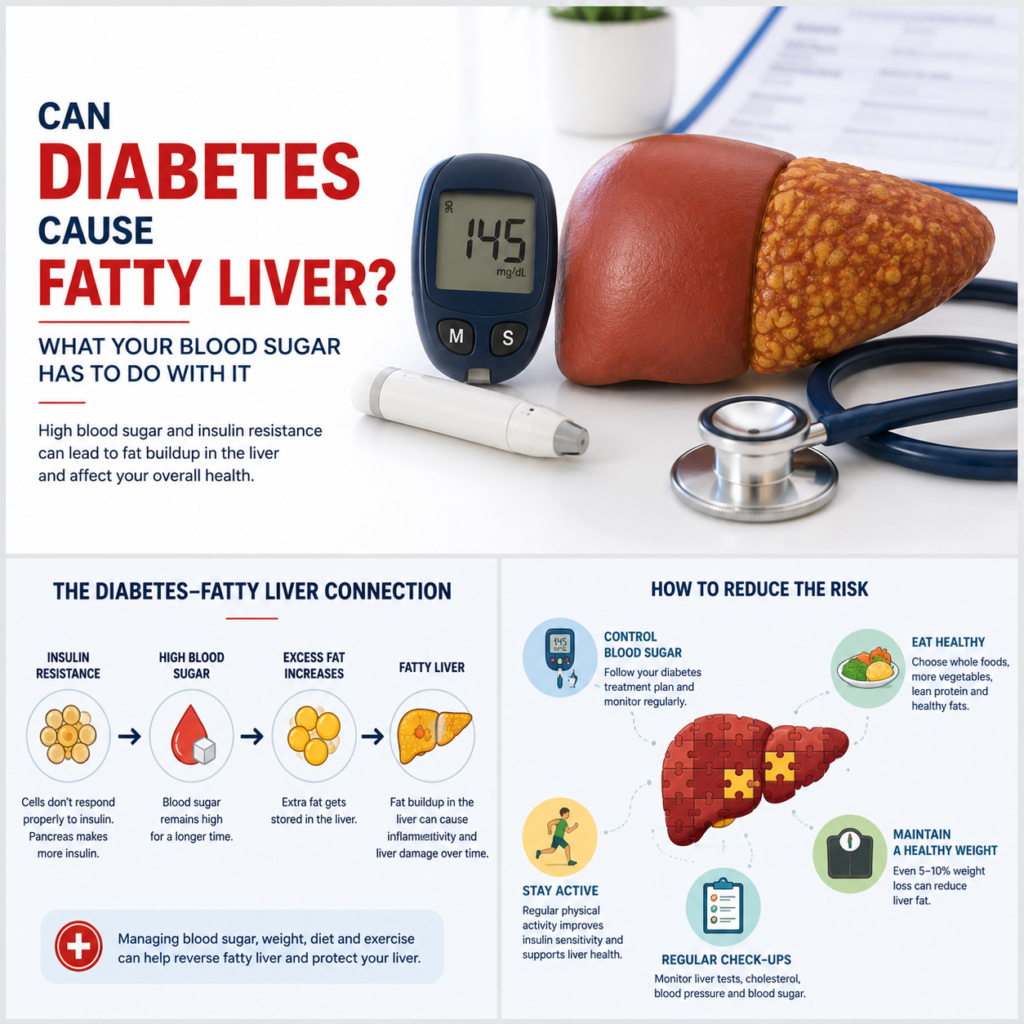
When you have insulin resistance, your body’s cells do not respond properly to insulin. To compensate, the body may produce more insulin.
This can interfere with the way your body handles glucose and fat. Over time, excess fat may accumulate inside liver cells.
This is one reason I commonly see diabetes and fatty liver occurring together.
Today, this condition is often referred to as metabolic dysfunction-associated steatotic liver disease (MASLD).
NIDDK explains that metabolic factors such as insulin resistance, overweight, and type 2 diabetes are associated with fatty liver disease.
Does High Blood Sugar Directly Cause Fatty Liver?
It is more accurate to say that diabetes and fatty liver share common metabolic causes, rather than saying that every case of fatty liver is directly caused by high blood sugar.
Insulin resistance is an important link between the two.
Your risk can also be influenced by:
- Excess body weight, particularly abdominal fat
- High triglycerides
- Unhealthy eating patterns
- Physical inactivity
- Poorly controlled diabetes
- Genetic factors
So, if you have diabetes and are diagnosed with fatty liver, I would look at your overall metabolic health, rather than focusing only on your liver report.
Why Should You Take Fatty Liver Seriously?
One of the challenging things about fatty liver is that you may not feel anything in the early stages.
Many patients discover it during an ultrasound performed for another reason.
In some people, however, liver fat can progress to inflammation and eventually scarring. This is why I recommend taking an incidental finding of fatty liver seriously, even if you feel completely healthy.
The good news is that early-stage fatty liver can often be managed through appropriate lifestyle and medical intervention.
What Can You Do If You Have Diabetes and Fatty Liver?
The first step is to improve the factors contributing to metabolic dysfunction.
Control Your Blood Sugar
Follow your diabetes treatment plan and monitor your glucose as advised. Don’t change or stop medicines without consulting your doctor.
The CDC recommends managing blood sugar and adopting healthy lifestyle habits as important parts of diabetes management.
Improve Your Diet
Reduce sugary drinks, excessive sweets, refined carbohydrates, and highly processed foods. Focus on vegetables, adequate protein, whole grains, and sensible portions.
Stay Physically Active
Regular exercise can improve insulin sensitivity and support liver health. For many people, starting with consistent walking is a practical first step.
Work Towards a Healthy Weight
If you are overweight, even gradual, sustainable weight loss can help improve metabolic health and reduce liver fat.
Monitor Your Health Regularly
Depending on your individual situation, your physician may assess HbA1c, blood sugar, cholesterol, triglycerides, liver enzymes, blood pressure, and body weight.
When Should You Consult a Physician?
If you have diabetes and your ultrasound shows fatty liver, don’t panic but don’t ignore it either.
I recommend discussing the report with a physician who can look at your blood sugar, medications, weight, cholesterol, liver tests, and other risk factors together.
Fatty liver is not just a liver problem. It can be an important indicator of your overall metabolic health.
Final Takeaway
Yes, diabetes and fatty liver are closely linked, particularly through insulin resistance. But having diabetes does not mean that fatty liver is inevitable.
The earlier you identify and manage the underlying metabolic risk factors, the better your chances of protecting your liver and overall health.
If you have diabetes, an abnormal liver report, or have recently been diagnosed with fatty liver, don’t rely on the ultrasound report alone. Get a proper medical evaluation and understand what your results mean for your health.
About the Author
Dr. Dileep Verma
Diabetologist & Physician | Safal Clinic & Wellness Center, Lucknow
This is preferable to repeatedly inserting Best Diabetologist in Lucknow into the article. Use the keyword strategically in the page’s SEO elements and relevant contextual sections rather than keyword stuffing.
About the Author
Dr. Dileep Verma
Diabetologist & Physician | Safal Clinic & Wellness Center, Lucknow
This is preferable to repeatedly inserting Best Diabetologist in Lucknow into the article. Use the keyword strategically in the page’s SEO elements and relevant contextual sections rather than keyword stuffing.