
“Doctor, my blood sugar was 118 yesterday and 196 today. I’m taking my medicines regularly. Why does this keep happening?”
This is one of the most common concerns among people living with diabetes. Many patients assume that if they’re eating the same foods and taking their medicines on time, their blood sugar levels should remain exactly the same every day. However, diabetes is far more dynamic than many people realize.
Blood sugar levels can fluctuate due to several factors, including nutrition, physical activity, sleep, stress, and even the timing of your medicines. Understanding these changes is an important part of effective diabetes management.
1. Your Meal Timing Matters
It’s not just what you eat it’s also when you eat.
Skipping meals, eating dinner late at night, or consuming carbohydrate-rich foods without proper portion control may influence blood sugar levels. Even healthy foods can affect blood sugar differently depending on quantity and timing.
Maintaining consistency in your meal schedule can support better blood sugar control over time.
2. Poor Sleep Can Affect Blood Sugar Levels
Sleep and diabetes management are closely connected.
Inadequate or poor-quality sleep may influence hormonal balance and insulin sensitivity, potentially contributing to fluctuations in blood sugar levels. Individuals who consistently sleep less than recommended may notice greater variability in their glucose readings.
Never underestimate the role of good sleep in maintaining overall health.
3. Stress Can Influence Blood Sugar
Physical and emotional stress may affect blood sugar levels more than many people realize.
When the body experiences stress, it releases hormones that can contribute to elevated blood sugar levels. Work-related stress, illness, anxiety, and inadequate rest may all play a role in day-to-day fluctuations.
Managing diabetes isn’t only about medicines it’s also about managing your lifestyle.
4. Irregular Physical Activity
Exercise plays an important role in diabetes management.
Being physically active on some days and completely sedentary on others may contribute to variations in blood sugar levels. Consistency is often more important than intensity.
Simple lifestyle modifications such as regular walking and physician-guided exercise plans may help support better glucose control.
5. Are You Monitoring Your HbA1c?
Many patients become anxious after seeing a single high blood sugar reading.
However, one day’s blood sugar level doesn’t always reflect your overall diabetes management. This is where HbA1c testing becomes particularly valuable, as it provides an overview of your average blood sugar levels over the previous two to three months.
Focusing only on daily readings may not always provide the complete picture.
According to the American Diabetes Association Standards of Care in Diabetes, regular monitoring of blood glucose levels and HbA1c plays an important role in comprehensive diabetes management.
6. Medicines Should Be Taken as Advised
Taking medicines at irregular times or missing doses may affect blood sugar control.
Additionally, treatment plans sometimes require periodic review. Changes in body weight, lifestyle habits, or the progression of diabetes may influence your medical needs over time.
Never make changes to your medicines without consulting your physician.
7. Diabetes Management Is More Than Sugar Control
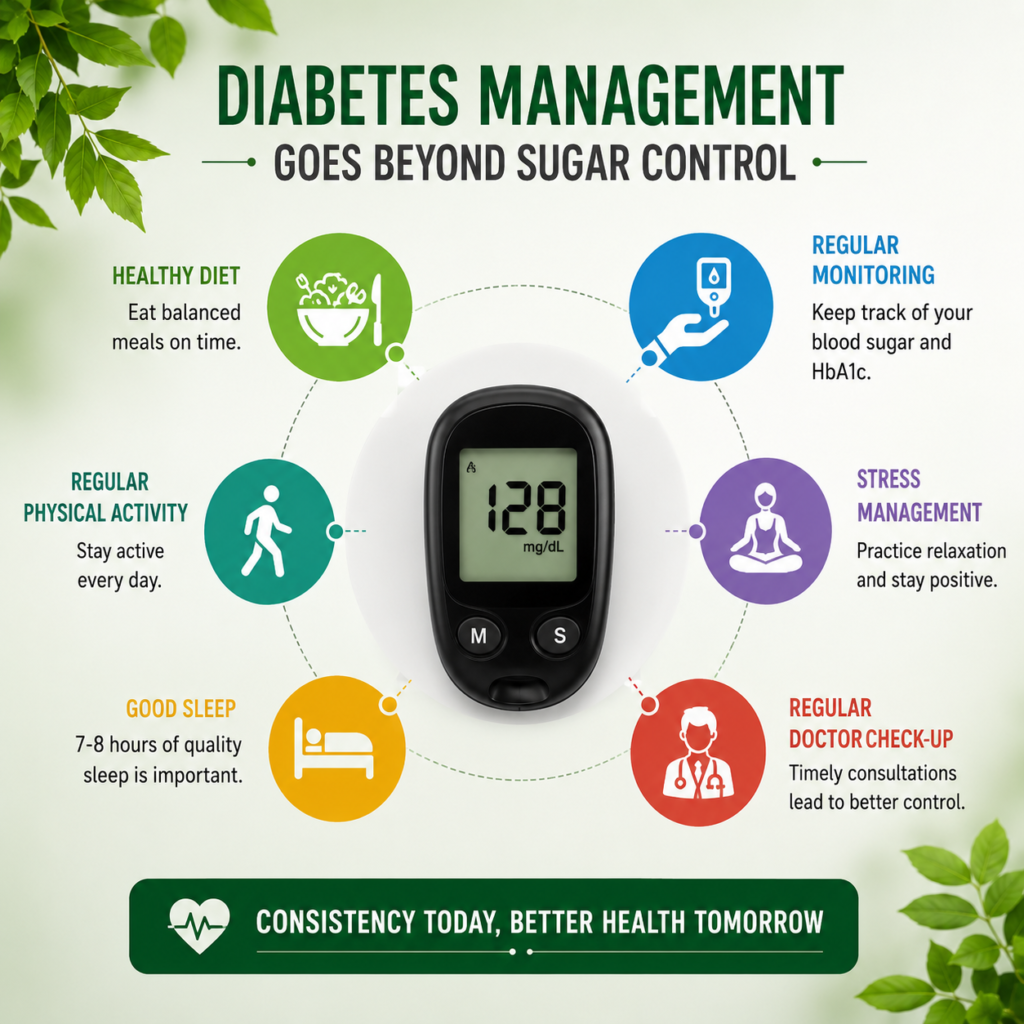
Perhaps the biggest misconception about diabetes is that it begins and ends with a glucometer reading.
Effective diabetes management includes:
- Regular blood sugar monitoring
- HbA1c assessment
- Personalized nutrition guidance
- Physical activity
- Healthy sleep habits
- Regular medical consultations and follow-ups
- Timely screening for diabetes-related complications
Taking a holistic approach can often make a meaningful difference in long-term health outcomes.
Final Thoughts
Blood sugar fluctuations don’t always mean that something is seriously wrong. However, they should never be ignored.
If your blood sugar levels have been varying significantly despite following your treatment plan, it may be time to evaluate the bigger picture of your diabetes management. Small lifestyle changes, regular monitoring, and timely medical guidance can play an important role in achieving better long-term blood sugar control.
Remember, successful diabetes management isn’t about chasing perfect numbers every day—it’s about making consistent and informed choices for your health.
The World Health Organization (WHO) emphasizes the importance of early diagnosis, regular monitoring, and appropriate diabetes management to help reduce the risk of long-term complications.
About Dr. Dileep Verma
Dr. Dileep Verma is a Physician & Diabetologist in Lucknow with over 22 years of clinical experience in diabetes and internal medicine. Through the Safal Diabetes Management Program, he follows a comprehensive approach that combines physician-led care, diagnostics, personalized nutrition, and lifestyle management. Patients seeking a Best Physician in Lucknow for diabetes care can benefit from an integrated and evidence-based approach focused on long-term health outcomes.