Diabetes can develop gradually, and some people may have elevated blood sugar without noticing obvious symptoms. You might feel tired throughout the day, feel unusually thirsty or need to visit the bathroom more often than usual without realising that your blood sugar could be involved.
As a physician, I encourage people to pay attention to persistent changes in their health and understand when blood sugar testing may be appropriate. You do not always have to feel unwell to benefit from diabetes screening.
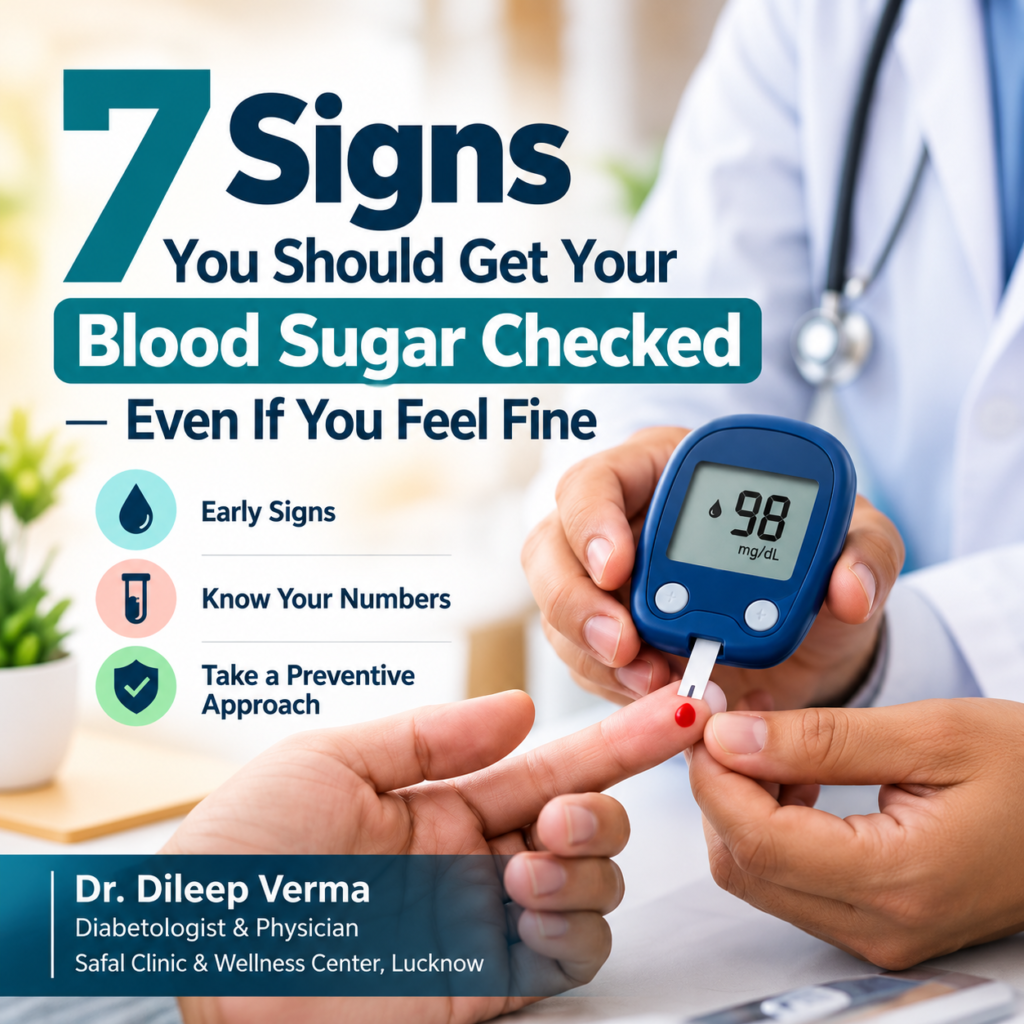
Here are seven signs and risk factors you should know about.
1. Frequent Urination, Especially at Night
Are you visiting the bathroom more often than usual, particularly during the night? High blood sugar can cause the kidneys to remove more glucose through urine, increasing urine production.
Frequent urination can also have other causes. If it persists, discuss it with a healthcare professional. You can also read our guide to common causes of frequent urination.
2. Excessive Thirst
Feeling unusually thirsty despite drinking enough water can be associated with elevated blood glucose. When excessive thirst occurs alongside frequent urination, it is particularly important to seek medical advice.
3. Persistent Tiredness
Do you feel exhausted even after getting enough sleep? Fatigue has many possible causes, including diabetes, anaemia, thyroid disorders and sleep problems.
If tiredness persists without a clear explanation, a physician may recommend blood glucose testing based on your symptoms and medical history.
4. Increased Hunger
Feeling hungry soon after eating may result from your meal composition, eating habits or other health factors. Increased hunger accompanied by excessive thirst, frequent urination or unexplained weight loss warrants medical assessment.
5. Blurred Vision
Changes in blood glucose can temporarily affect the eye’s ability to focus. If your vision becomes blurred or changes repeatedly, seek medical advice rather than assuming the problem is simply eye strain. Sudden vision loss requires urgent medical attention.
6. Unexplained Weight Loss or Slow-Healing Wounds
Losing weight without changing your diet or physical activity can sometimes be a symptom of diabetes. Persistently slow-healing wounds may also be associated with elevated blood glucose, although other conditions can contribute.
If you notice either problem, particularly alongside other symptoms, arrange a medical evaluation.
7. Diabetes Risk Factors Even Without Symptoms
You may need screening even if you feel perfectly healthy. Risk factors include:
- A family history of diabetes.
- Excess body weight or physical inactivity.
- A previous diagnosis of prediabetes or elevated blood glucose.
- A history of gestational diabetes.
- Other medical or personal risk factors identified by your physician.
The appropriate screening test and frequency depend on your age, risk factors and medical history.
What Do Your Blood Sugar Numbers Mean?
Blood tests can help identify whether your blood glucose is within the expected range or whether further assessment is needed.
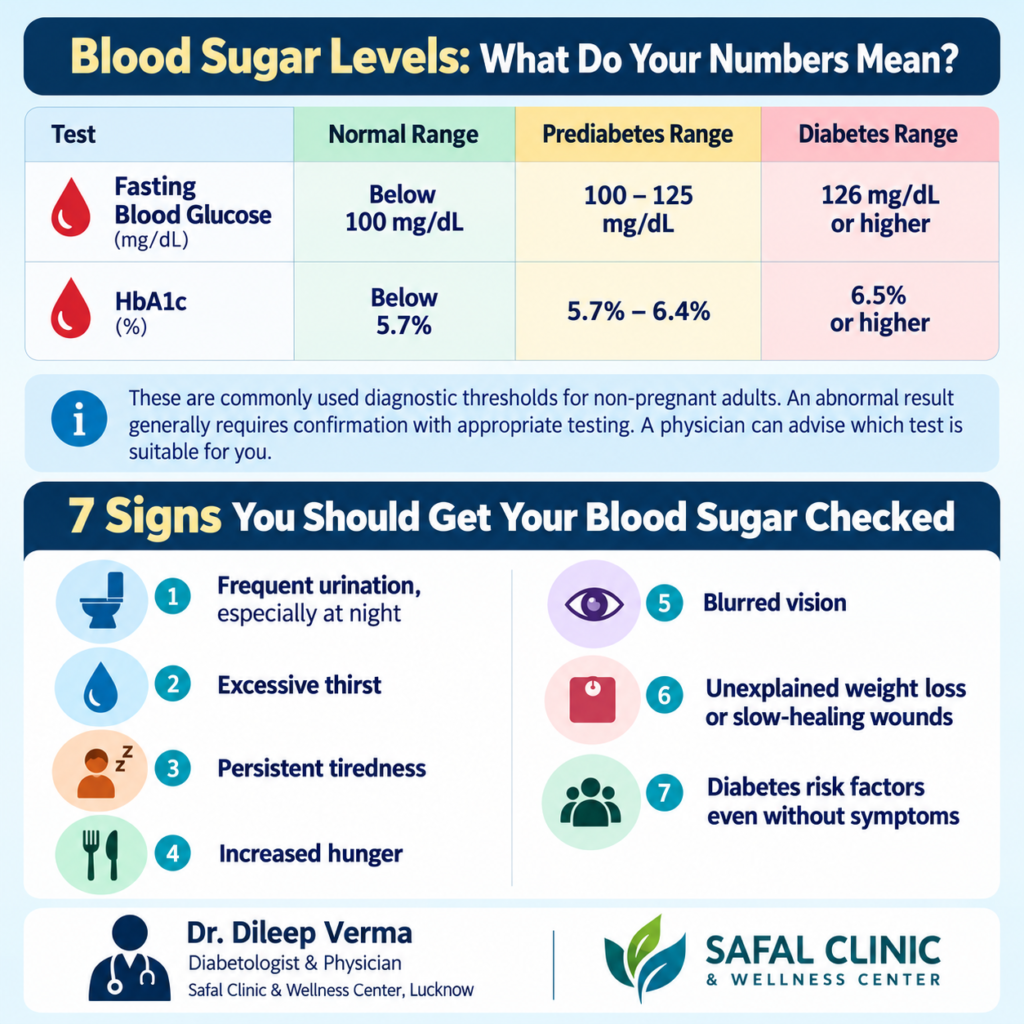
| Test | Normal range | Prediabetes range | Diabetes range |
|---|---|---|---|
| Fasting blood glucose | Below 100 mg/dL | 100–125 mg/dL | 126 mg/dL or higher |
| HbA1c | Below 5.7% | 5.7–6.4% | 6.5% or higher |
These are commonly used diagnostic thresholds for non-pregnant adults. An abnormal result generally requires confirmation with appropriate testing unless the clinical situation clearly establishes diabetes. Certain medical conditions can also affect HbA1c accuracy.
A physician may recommend fasting blood glucose, HbA1c or another test depending on your circumstances.
For more information, read the CDC guide to diabetes symptoms and the NIDDK guide to diabetes tests and diagnosis.
A Quick Blood Sugar Awareness Checklist
Ask yourself:
- Have I been unusually thirsty or urinating more frequently?
- Have I experienced persistent tiredness or increased hunger?
- Have I noticed unexplained weight loss or blurred vision?
- Do I have a family history of diabetes or other recognised risk factors?
If you answered yes to any of these questions, it does not automatically mean you have diabetes. However, persistent symptoms or relevant risk factors may warrant a conversation with your doctor. This checklist is for awareness only; it is not a validated risk score and cannot diagnose diabetes.
When Should You Consult a Doctor in Lucknow?
If you have persistent symptoms or risk factors for diabetes, consider arranging a medical consultation rather than relying on guesswork.
Dr. Dileep Verma, a diabetologist and physician at Safal Clinic & Wellness Center, Lucknow, provides consultations for diabetes assessment and ongoing care.
When choosing the Best Diabetologist in Lucknow, Best Physician in Lucknow or Best Sugar Doctor in Lucknow, consider the doctor’s qualifications, clinical experience and suitability for your healthcare needs.
You can also explore our guide to the effects of high blood sugar on the body.
Take a Preventive Approach to Your Health
Diabetes can remain undetected for some time, which is why appropriate screening matters. Do not rely on symptoms alone to determine whether your blood sugar is normal.
My advice is simple: pay attention to persistent changes in your health, understand your risk factors and discuss appropriate testing with a qualified healthcare professional.
Dr. Dileep Verma
Diabetologist & Physician
Safal Clinic & Wellness Center, Lucknow