Winter often brings its share of coughs, colds and throat infections. For some people, the cough settles within a few days. For others, it lingers long after the fever or runny nose has gone away.
A cough that continues for weeks can be frustrating, especially when it disturbs sleep or makes everyday activities uncomfortable. While a common cold is often responsible, it is not the only possible explanation.
Cold air, allergies, asthma and certain respiratory infections can also cause coughing during winter. Sometimes, the reason has nothing to do with the weather at all.
So, when should you be concerned about a persistent cough? Here are seven possible causes and the symptoms worth paying attention to.
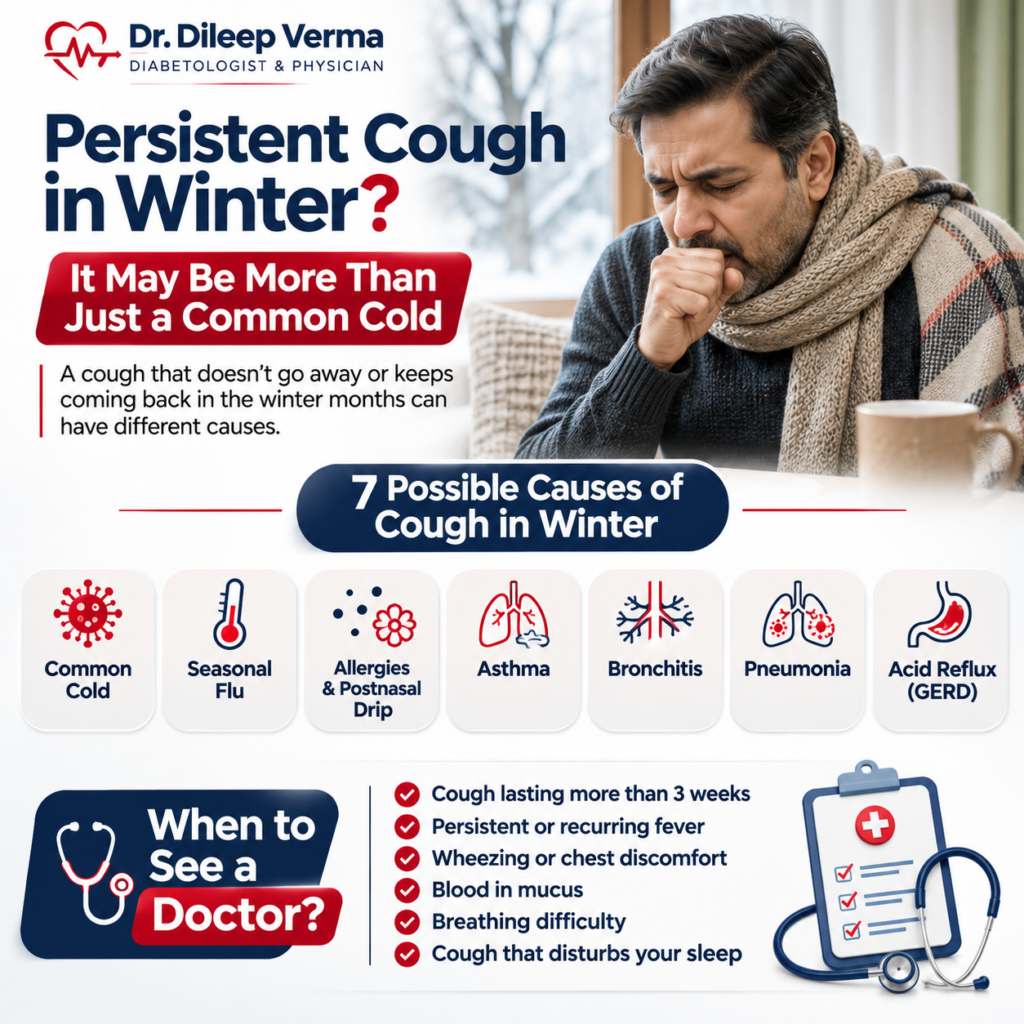
Why Does Winter Often Bring More Coughing?
People tend to spend more time indoors during colder months. This can increase exposure to respiratory viruses, particularly in crowded or poorly ventilated spaces.
Cold, dry air can also irritate the airways. For someone with asthma or sensitive air passages, stepping outside into chilly weather may trigger coughing.
Other factors, such as indoor dust, smoke and seasonal infections, can make the problem worse.
The important thing to remember is that a cough is a symptom, not a diagnosis. Its duration and accompanying symptoms often provide useful clues about the underlying cause.
7 Possible Causes of a Persistent Winter Cough
1. Common Cold
A common cold is one of the usual reasons people develop a cough during winter. It is caused by viruses and generally affects the nose and throat.
You may notice a blocked or runny nose, sneezing, a sore throat and mild tiredness. Some people develop a dry cough, while others bring up mucus.
Most colds improve with time and supportive care. However, if your symptoms are getting worse or the cough is not settling, it is worth speaking to a doctor.
For further information, the CDC’s guide to the common cold explains its symptoms and spread.
2. Seasonal Flu
Influenza, commonly called the flu, can make a person feel considerably more unwell than an ordinary cold.
It often begins with fever, chills, body aches, headache and tiredness. A dry cough and sore throat may develop as well.
Older adults and people with certain long-term health conditions are more likely to experience complications. If you belong to a higher-risk group, seek medical advice early rather than waiting for symptoms to become severe.
3. Allergies and Postnasal Drip
Not every winter cough is caused by an infection. Dust, indoor allergens and other irritants can also trigger coughing.
One possible reason is postnasal drip. This happens when mucus from the nose runs down the back of the throat, causing irritation and the urge to cough.
You might also experience sneezing, an itchy nose, watery eyes or frequent throat clearing.
If these symptoms keep returning, a doctor can help determine whether allergies or another condition may be responsible.
4. Asthma
Some people notice that their asthma becomes harder to manage during winter. Cold air, respiratory infections and indoor allergens can trigger symptoms.
An asthma-related cough may be particularly troublesome at night or after physical activity. It can also occur with wheezing, chest tightness or breathlessness.
If you regularly cough after going outside in cold weather, or wake up coughing at night, do not dismiss it as a seasonal problem. Arrange a medical assessment.
Severe or rapidly worsening breathing difficulty requires urgent medical attention.
5. Bronchitis
Bronchitis develops when the bronchial tubes, which carry air into and out of the lungs, become inflamed.
Acute bronchitis often follows a respiratory infection. The cough may be dry at first and later produce mucus. Some people also experience chest discomfort, tiredness and a mild fever.
Most cases of acute bronchitis are caused by viruses. This is why antibiotics are not automatically needed for every cough.
A doctor can assess your symptoms and decide whether further examination or treatment is necessary.
6. Pneumonia
Pneumonia is a lung infection that causes inflammation in the air sacs. It can affect people of any age, although older adults and individuals with existing health problems may be more vulnerable to complications.
Symptoms can include fever, chills, coughing, chest pain when breathing and shortness of breath. Some people also feel unusually weak or lose their appetite.
Pneumonia should not be confused with an ordinary winter cough. If you have a cough accompanied by fever, chest pain or breathing discomfort, seek medical attention.
You can read more about cough symptoms and when to seek help in the NHS guide to coughs.
7. Acid Reflux (GERD)
A cough that keeps returning, particularly after meals or when lying down, may sometimes be related to acid reflux.
Acid reflux occurs when stomach contents move back into the food pipe. This can irritate the throat and trigger coughing in some people.
Other symptoms may include heartburn, a sour taste in the mouth and throat irritation.
If you notice a connection between your meals, lying down and coughing, mention it during your medical consultation.
When Should You See a Doctor?
An occasional cough during a cold is usually not a reason to panic. However, a cough that lasts longer than three weeks deserves medical evaluation.
You should also consult a doctor if you notice:
- Fever that persists or keeps returning
- Wheezing or chest discomfort
- Blood in your mucus
- Unexplained weight loss
- Repeated coughing that interrupts your sleep
- Symptoms that are getting worse instead of improving
Do not wait for a routine appointment if you experience severe breathing difficulty, significant chest pain, confusion or blue or grey lips. These symptoms need urgent medical attention.
If your cough occurs alongside fever, you may also find our guide to viral fever symptoms and precautions in Lucknow helpful.
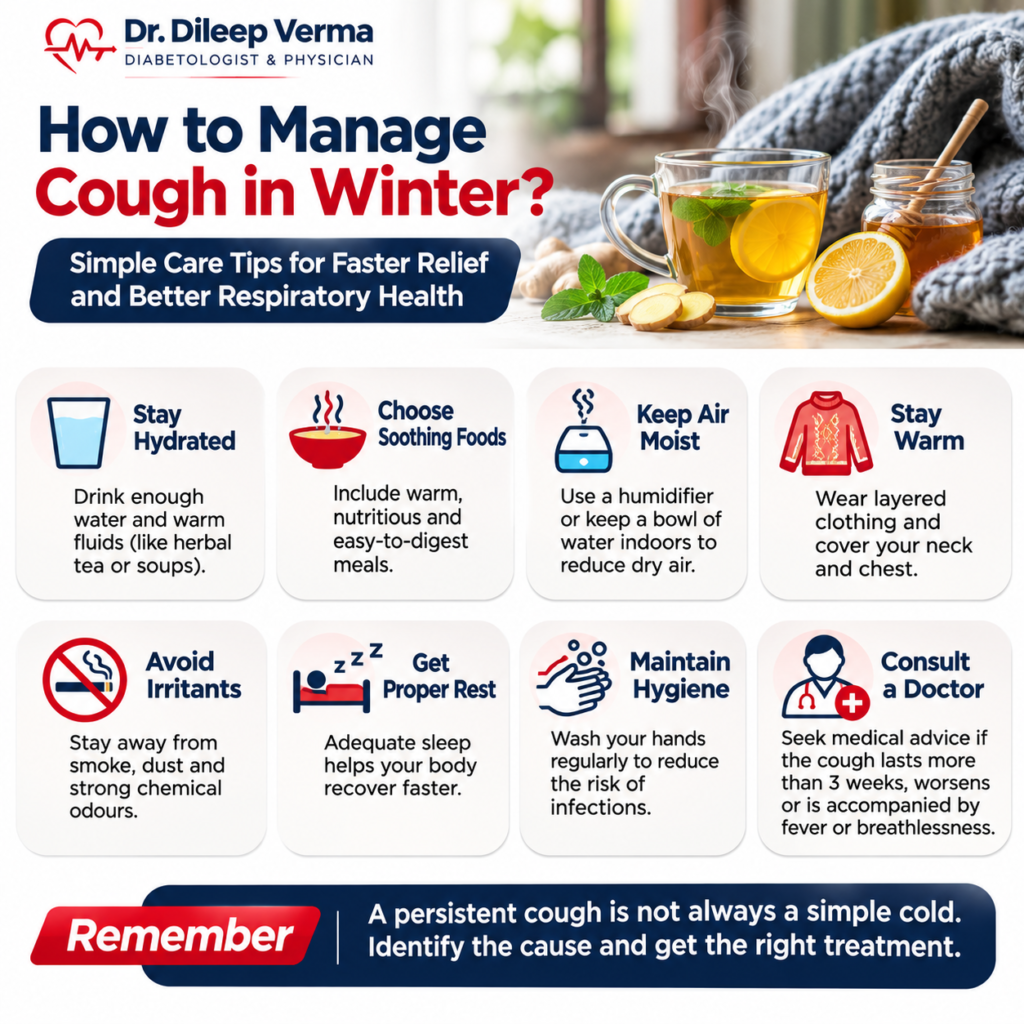
What Can You Do to Reduce Winter Respiratory Problems?
A few everyday precautions can help reduce exposure to respiratory infections and avoid unnecessary irritation of the airways.
- Wash your hands regularly, particularly after returning from crowded places.
- Keep indoor spaces appropriately ventilated.
- Drink enough water throughout the day.
- Avoid smoking and exposure to second-hand smoke.
- Get adequate sleep and maintain a balanced diet.
- Avoid close contact with people who have active respiratory infections.
- Discuss recommended vaccinations with your doctor.
If you have asthma or another respiratory condition, continue following your prescribed treatment plan. Do not stop medication or start antibiotics on your own.
Why Regular Medical Check-ups Matter
People sometimes get used to recurring coughs, throat irritation or breathing discomfort and assume these problems are simply part of winter.
That assumption can delay the identification of an underlying condition.
A medical consultation allows a doctor to understand how long the cough has lasted, what makes it worse and whether other symptoms are present. Depending on the findings, further tests may be recommended.
You can also read about the importance of regular health check-ups to understand why persistent symptoms should not be overlooked.
Consult the Best Physician in Lucknow for a Persistent Cough
A cough that does not settle deserves attention, particularly when it is accompanied by fever, wheezing, chest discomfort or breathlessness. The right treatment depends on what is causing it, which is why identifying the underlying problem matters.
If you are searching for the Best Physician in Lucknow, Dr. Dileep Verma at Safal Clinic & Wellness Center, Ashiyana, Lucknow, provides physician and diabetes-related consultations.
Dr. Dileep Verma holds an MBBS and MD in Internal Medicine, along with a Fellowship in Diabetes Mellitus (UK), and has 24 years of clinical experience.
For consultation details, visit Safal Clinic & Wellness Center.
If you are also experiencing recurring headaches, read our article on common causes of frequent headaches.
Frequently Asked Questions
How long does a winter cough usually last?
A cough following a common cold may continue for a few weeks, even after other symptoms have improved. However, a cough lasting more than three weeks should be assessed by a doctor.
Can cold weather itself cause coughing?
Cold air can irritate the airways and trigger coughing, particularly in people with asthma or sensitive air passages. However, infections, allergies and other medical conditions can also be responsible.
Does every persistent cough require antibiotics?
No. Many respiratory infections are caused by viruses, against which antibiotics are ineffective. A doctor should determine whether antibiotics are appropriate.
Why does my cough become worse at night?
Possible reasons include postnasal drip, asthma and acid reflux. The pattern of your symptoms can help a doctor identify the cause.
When should I seek urgent medical attention?
Seek urgent help if you experience severe breathing difficulty, significant chest pain, confusion, blue or grey lips or cough up more than a small amount of blood.
Medical disclaimer: This article is intended for general health education. It does not replace a medical consultation, diagnosis or personalised treatment advice.