Diwali is a time for celebrations, family gatherings, festive meals and fireworks. However, changes in eating habits, increased pollution, irregular sleep and firecracker exposure can also affect your health.
While most people enjoy the festivities without major problems, certain health concerns may become more noticeable during this period. Whether you are celebrating in Lucknow or elsewhere, understanding these risks can help you enjoy Diwali while taking care of yourself and your family.
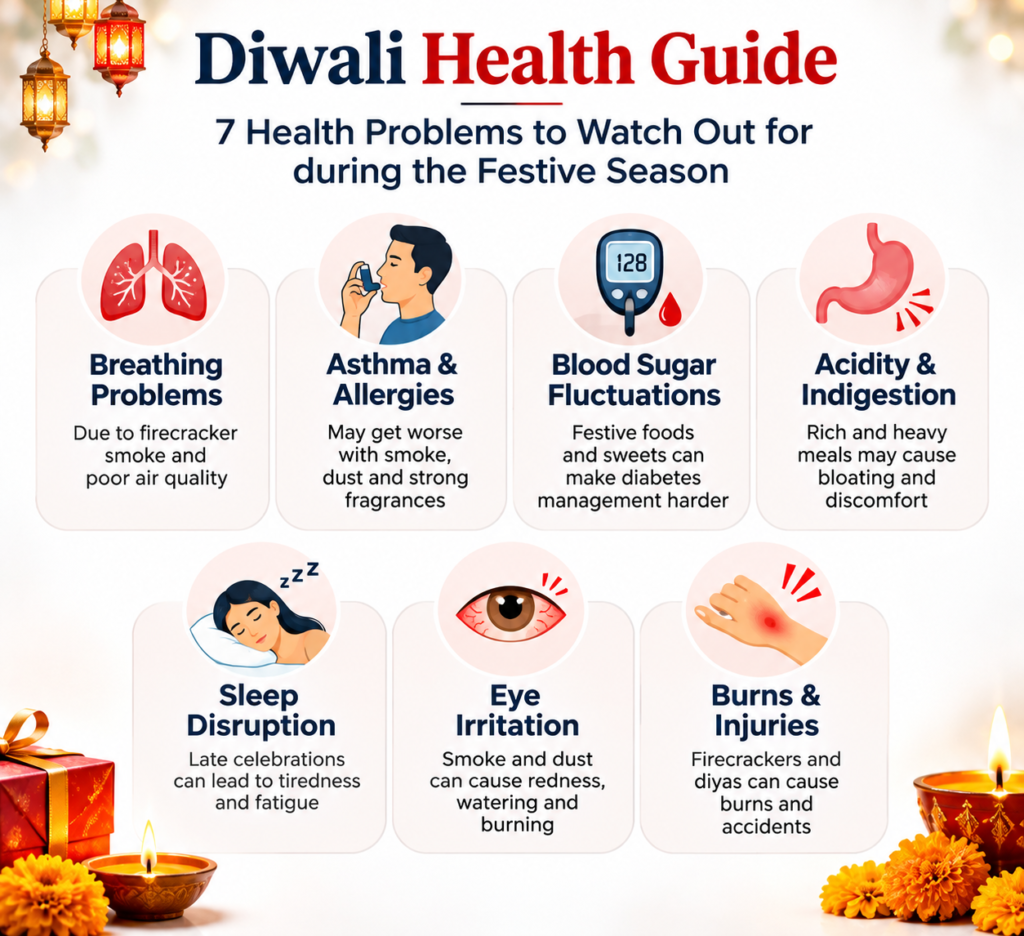
Here are seven health problems to watch out for during the festive season.
1. Breathing Problems Due to Firecracker Smoke
Firecracker smoke releases particulate matter and other pollutants into the air. Exposure can irritate the respiratory tract and cause coughing, throat irritation, wheezing or breathlessness.
People with asthma, chronic lung conditions and other respiratory problems may be particularly sensitive.
What can help?
- Avoid areas with heavy firecracker smoke.
- Keep windows closed when outdoor pollution is high.
- Avoid outdoor exercise when air quality is poor.
- Follow your prescribed asthma or respiratory treatment plan.
If you experience severe breathlessness or difficulty speaking because of breathing problems, seek emergency medical attention.
2. Asthma and Respiratory Allergies May Get Worse
For people with asthma or respiratory allergies, Diwali can be a challenging time. Smoke, dust and strong fragrances from certain festive products may trigger symptoms.
Common warning signs include repeated coughing, chest tightness, wheezing and difficulty breathing.
Keep prescribed inhalers accessible and use them according to your doctor’s instructions. Do not ignore worsening symptoms or increase medication doses without medical advice.
3. Blood Sugar Fluctuations After Festive Eating
Diwali celebrations often involve sweets, sugary drinks and carbohydrate-rich meals. For people living with diabetes, changes in food portions and daily routines can make blood glucose management more difficult.
Eating sweets does not automatically cause diabetes, but frequent high-sugar meals can make blood glucose harder to manage, particularly in people who already have diabetes.
Practical precautions:
- Follow your usual meal and medication schedule.
- Be mindful of sweet portions.
- Monitor blood glucose as advised by your doctor.
- Avoid skipping meals to compensate for festive eating.
- Do not change medication doses without medical guidance.
For more information, read our related article: What Happens to Your Body When Blood Sugar Stays High for Too Long?
4. Acidity, Indigestion and Digestive Discomfort
Fried snacks, rich gravies, sweets and large meals can contribute to acidity, bloating and indigestion.
Eating late at night or lying down immediately after a heavy meal may also worsen acid reflux in some people.
Try eating smaller portions, avoiding foods that trigger your symptoms and allowing time between dinner and bedtime. If you experience persistent abdominal pain, repeated vomiting or difficulty swallowing, consult a healthcare professional.
Read more: Why Am I Always Hungry Even After Eating? 7 Possible Reasons
5. Sleep Disruption and Fatigue
Late-night celebrations, social gatherings and changes in daily routines can affect sleep quality.
Insufficient sleep may leave you feeling tired, irritable and less focused the following day. It can also make blood glucose management more difficult for people with diabetes.
Try maintaining a reasonably consistent bedtime, limiting late-night screen exposure and allowing enough time for rest.
If unusual tiredness continues even after adequate sleep, it may need medical evaluation.
Related reading: Why Am I Always Feeling Sleepy? 8 Common Medical Causes You Should Know
6. Eye Irritation From Smoke and Dust
Firecracker smoke, dust and airborne particles can irritate the eyes. Symptoms may include redness, watering, burning and a gritty sensation.
Avoid rubbing your eyes, as this may worsen irritation. Move away from smoke and rinse irritated eyes gently with clean water.
If a firecracker particle enters the eye, or you experience eye pain, blurred vision or persistent irritation, seek urgent medical attention. Do not attempt to remove an embedded object yourself.
7. Burns and Firecracker-Related Injuries
Firecrackers, sparklers and diyas can cause burns and other injuries if handled carelessly.
Keep children away from fireworks, use them only in open spaces where permitted and follow the manufacturer’s safety instructions. Keep water or an appropriate fire extinguisher nearby.
If someone suffers a burn, cool the affected area under cool running water for 20 minutes. Do not apply ice, toothpaste, butter or home remedies. Cover the burn loosely with a clean, non-fluffy dressing and seek medical care, particularly for large, deep or facial burns.
Three authoritative references:
WHO – Ambient (Outdoor) Air Pollution
American Diabetes Association – Diabetes Food Hub
NHS – Burns and Scalds
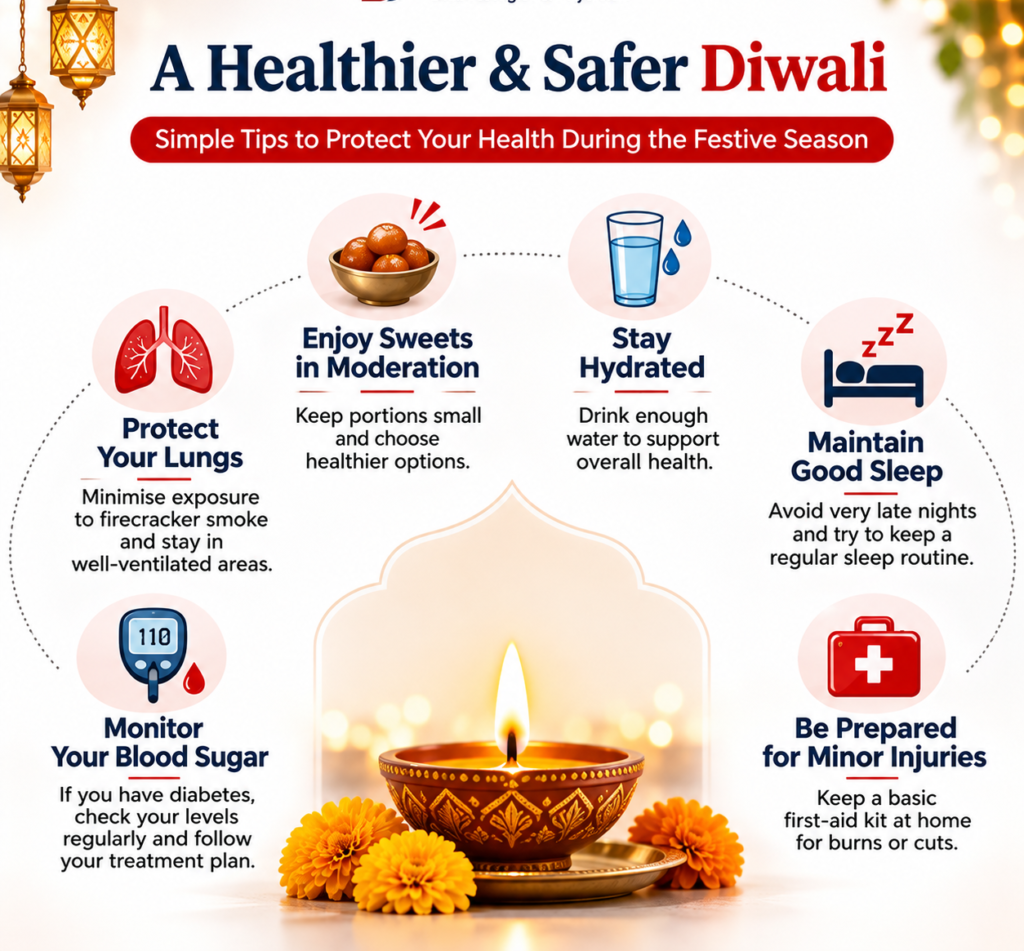
When Should You Consult a Doctor?
Do not dismiss symptoms simply because they appear during the festive season.
Seek urgent medical help for severe breathlessness, chest pain, fainting, confusion, serious burns, eye injuries or persistent vomiting.
People with diabetes, asthma, heart disease and other chronic conditions should continue their prescribed treatment and discuss any necessary changes with their healthcare provider.
Celebrate Diwali While Taking Care of Your Health
Diwali celebrations do not have to come at the cost of your health. Being mindful of air quality, eating sensibly, maintaining regular medication schedules and following firecracker safety precautions can reduce avoidable health risks.
If you experience persistent symptoms or need medical guidance, consult a qualified physician.
Dr. Dileep Verma, Diabetologist & Physician at Safal Clinic & Wellness Center, Lucknow, provides medical consultations for diabetes and general health concerns.
A little awareness and timely medical attention can help you and your family enjoy a safer and healthier festive season.
This article is intended for general health education and does not replace individual medical advice.