As temperatures drop during winter, some people may notice changes in their blood pressure readings. Cold weather can affect blood vessels, circulation and daily habits, potentially making blood pressure harder to manage.
For people already living with hypertension, winter is an important time to monitor their readings and follow their treatment plans.
If you are experiencing consistently elevated blood pressure or looking for a physician in Lucknow, understanding the possible causes and warning signs can help you make informed decisions about your health.
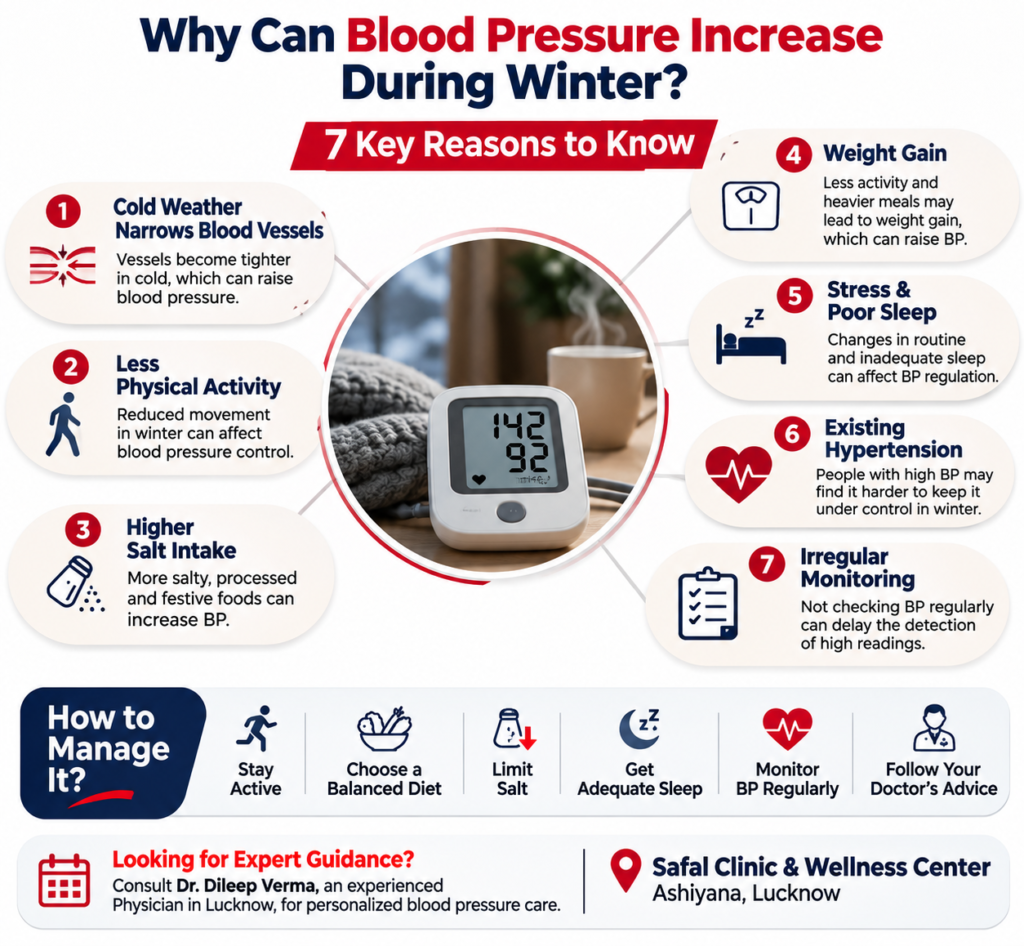
Here are seven factors that may contribute to higher blood pressure during winter.
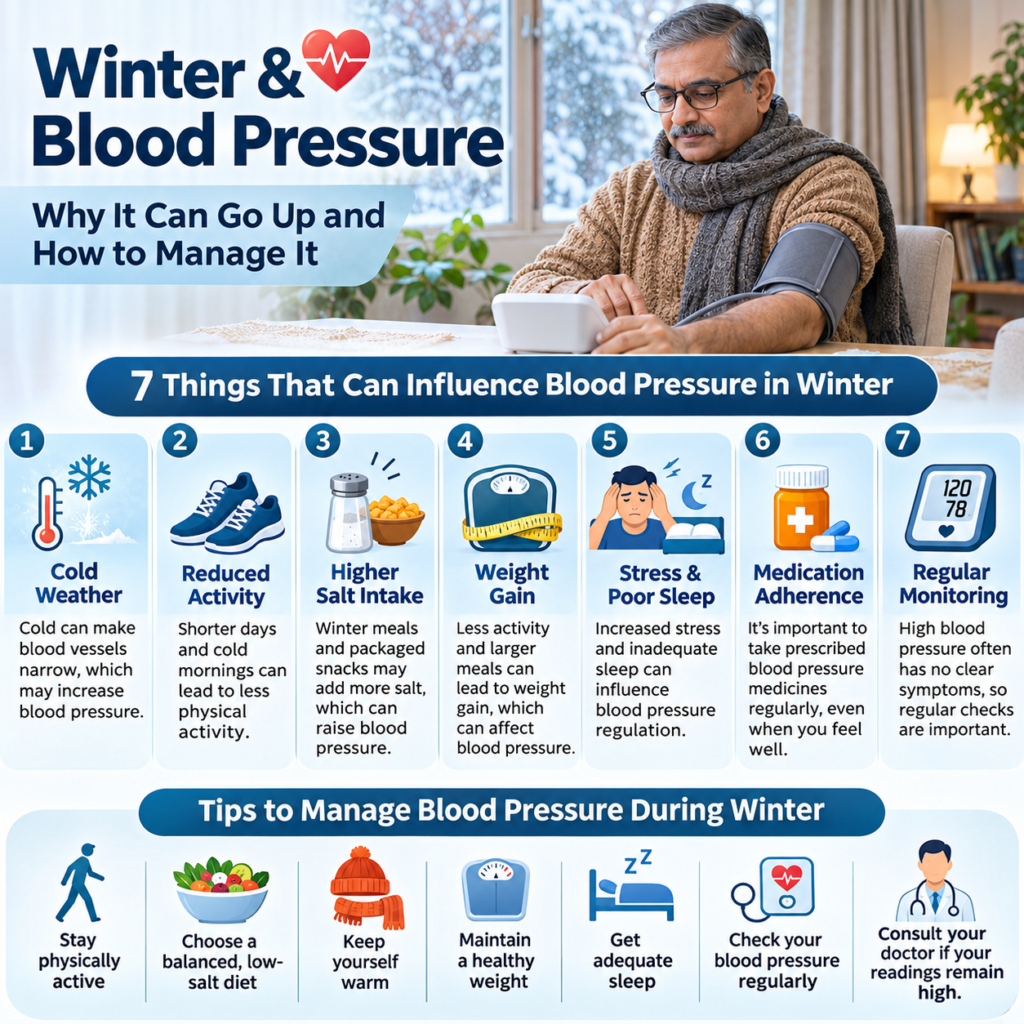
1. Cold Weather Causes Blood Vessels to Narrow
One of the main reasons blood pressure may increase during winter is vasoconstriction.
When the body is exposed to cold temperatures, blood vessels near the skin narrow to conserve body heat. This increases resistance to blood flow and can raise blood pressure.
The effect may be more noticeable in older adults and people who already have hypertension.
2. Reduced Physical Activity
Cold mornings and shorter daylight hours can make people less active during winter.
Many people reduce their outdoor walks and exercise routines, spending more time indoors. Reduced physical activity over time can contribute to weight gain and poorer blood pressure control.
What can help?
- Try indoor walking or light exercises.
- Maintain a consistent physical activity routine.
- Avoid strenuous outdoor exercise in extremely cold conditions.
- Follow your doctor’s advice if you have an existing heart condition.
3. Increased Salt Consumption
Winter meals often include soups, pickles, packaged snacks and rich seasonal foods. Some of these can contain considerable amounts of sodium.
Excessive sodium intake can contribute to fluid retention and increased blood pressure, particularly in people who are salt-sensitive.
Try preparing meals at home, checking packaged food labels and limiting excessive salt.
4. Winter Weight Gain
Reduced activity, larger meals and frequent snacking may contribute to weight gain during winter.
Excess body weight can increase the workload on the heart and is an important risk factor for hypertension.
Maintaining a balanced diet and regular physical activity can support better blood pressure management.
5. Stress and Poor Sleep
Changes in daily routines, reduced sunlight exposure and disrupted sleep patterns may affect overall well-being during winter.
Stress and inadequate sleep can influence blood pressure regulation. Persistent sleep problems may also be associated with an increased risk of hypertension.
Maintain a regular sleep schedule, practise relaxation techniques and seek medical advice if you experience ongoing sleep difficulties.
6. Existing Hypertension May Become Harder to Control
People who already have high blood pressure may experience seasonal variations in their readings.
Older adults and individuals with cardiovascular or kidney conditions may need closer monitoring.
Continue taking prescribed blood pressure medication even when you feel well. Never stop or change your dosage without consulting your doctor.
If your readings remain consistently above your recommended range, discuss them with a healthcare professional.
7. Irregular Blood Pressure Monitoring
During winter, people sometimes pay less attention to routine health checks because they feel comfortable or have no obvious symptoms.
However, high blood pressure is often called a silent condition because many people experience no noticeable symptoms.
Regular measurement is more reliable than waiting for headaches, dizziness or other symptoms.
For accurate home readings:
- Sit quietly for five minutes before measuring.
- Keep your back supported and feet flat on the floor.
- Place the cuff on your bare upper arm.
- Keep your arm supported at heart level.
- Take two readings approximately one minute apart and record them.
Use a properly validated blood pressure monitor and follow your healthcare professional’s instructions.
How Can You Maintain Healthy Blood Pressure During Winter?
A few consistent habits can support better blood pressure management:
- Stay physically active: Continue suitable indoor or outdoor exercise.
- Limit salt: Reduce excessive sodium and highly processed foods.
- Eat a balanced diet: Include vegetables, fruits, whole grains and appropriate protein sources.
- Stay warm: Dress appropriately when going outdoors in cold weather.
- Maintain a healthy weight: Follow sustainable eating and activity habits.
- Sleep adequately: Aim for a consistent sleep routine.
- Monitor blood pressure: Record readings regularly as advised by your doctor.
When Should You Consult a Physician?
If your blood pressure readings are repeatedly higher than your recommended target, consult a physician for assessment and treatment guidance.
A blood pressure reading of 180/120 mmHg or higher requires prompt attention. Repeat the measurement after at least one minute. If it remains this high, contact a healthcare professional immediately. If it is accompanied by chest pain, breathlessness, weakness, numbness, vision changes or difficulty speaking, seek emergency medical care.
Do not attempt to manage severely elevated blood pressure by changing medication doses yourself.
Consult a Physician in Lucknow for Blood Pressure Management
High blood pressure requires proper assessment, regular monitoring and an individualised treatment plan. Early medical evaluation can help identify associated risk factors and determine the appropriate course of care.
If you are searching online for the Best Physician in Lucknow for general medical consultation, hypertension assessment or ongoing health concerns, consider the doctor’s qualifications, clinical experience and suitability for your medical needs.
Dr. Dileep Verma, MBBS, MD (Internal Medicine), Fellowship in Diabetes Mellitus (UK), is a Diabetologist & Physician at Safal Clinic & Wellness Center, Lucknow. With 24 years of medical experience, he provides consultations for hypertension, diabetes and general medical concerns.
Consultation at Safal Clinic can help you understand your blood pressure readings and discuss an appropriate management plan.
Take Care of Your Heart This Winter
Cold weather, changes in physical activity and dietary habits can influence blood pressure. However, winter does not automatically mean that everyone will develop hypertension or experience a significant rise in readings.
Regular monitoring, appropriate physical activity, balanced nutrition and consistent medication use are important throughout the year.
Do not wait for symptoms to appear before checking your blood pressure. Timely medical advice and regular health assessments can make a difference.
This article is intended for general health education and does not replace individual medical advice.