Have you ever felt your heart suddenly beating faster than usual, even when you’re resting? A rapid heartbeat, also known as heart palpitations or tachycardia, can be unsettling. While it is often caused by stress, exercise, or caffeine, it can sometimes indicate an underlying medical condition that requires attention.
As a physician in Lucknow, I frequently meet patients who become concerned about a fast heartbeat. In many cases, the cause is harmless, but persistent or recurring symptoms should never be ignored. If you are looking for the Best Physician in Lucknow to evaluate heart palpitations or other health concerns, understanding the possible causes is the first step toward timely diagnosis and treatment.
What Is a Fast Heartbeat?
A normal resting heart rate for most adults ranges between 60 and 100 beats per minute. A heartbeat that consistently exceeds this range while at rest may require medical evaluation, particularly if it is associated with dizziness, chest pain, fainting, or shortness of breath.
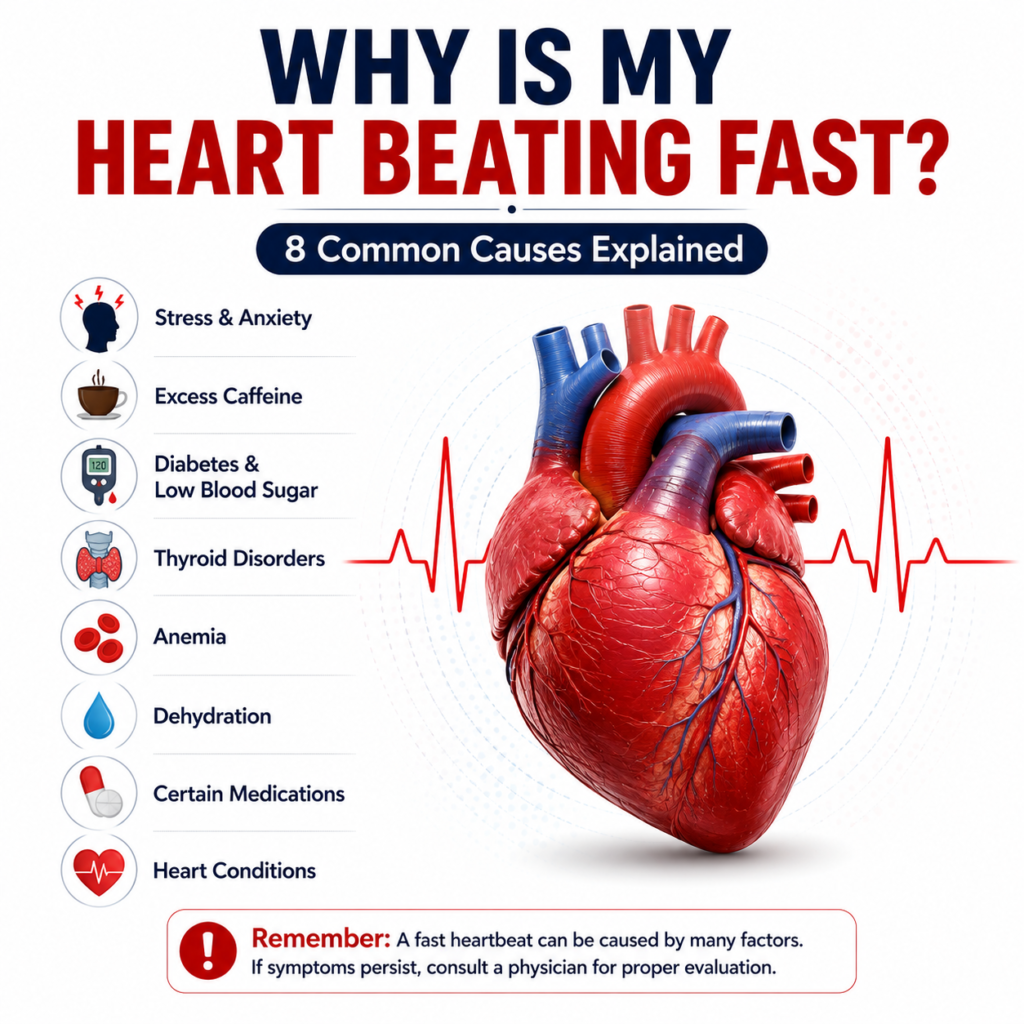
8 Common Causes of a Fast Heartbeat
1. Stress and Anxiety
Emotional stress, anxiety, or panic attacks can trigger the release of stress hormones, causing the heart to beat faster. Relaxation techniques, regular exercise, and adequate sleep often help manage stress-related palpitations.
2. Excess Caffeine
Coffee, tea, energy drinks, and certain soft drinks contain caffeine, which can temporarily increase your heart rate. Reducing caffeine intake may help if you frequently experience palpitations.
3. Diabetes and Low Blood Sugar
People with diabetes may experience a fast heartbeat during episodes of low blood sugar (hypoglycemia). Monitoring blood glucose levels regularly is important to avoid complications.
Related Reading:
👉 Why Is My Fasting Blood Sugar High in the Morning?
4. Thyroid Disorders
An overactive thyroid (hyperthyroidism) increases metabolism and may cause rapid heartbeat, sweating, weight loss, and nervousness.
5. Anemia
Low hemoglobin levels reduce oxygen delivery throughout the body, forcing the heart to pump faster to meet the body’s oxygen needs.
6. Dehydration
When the body loses too much fluid, blood volume decreases, making the heart work harder to maintain circulation. Drinking enough water is essential for heart health.
7. Certain Medications
Some medications, including asthma inhalers, decongestants, and thyroid medicines, may increase heart rate as a side effect. Never stop prescribed medication without consulting your physician.
8. Heart Conditions
In some cases, a rapid heartbeat may be linked to heart rhythm disorders or other cardiovascular conditions. If your symptoms occur frequently or are accompanied by chest pain, fainting, or difficulty breathing, seek immediate medical attention.
When Should You Consult a Physician?
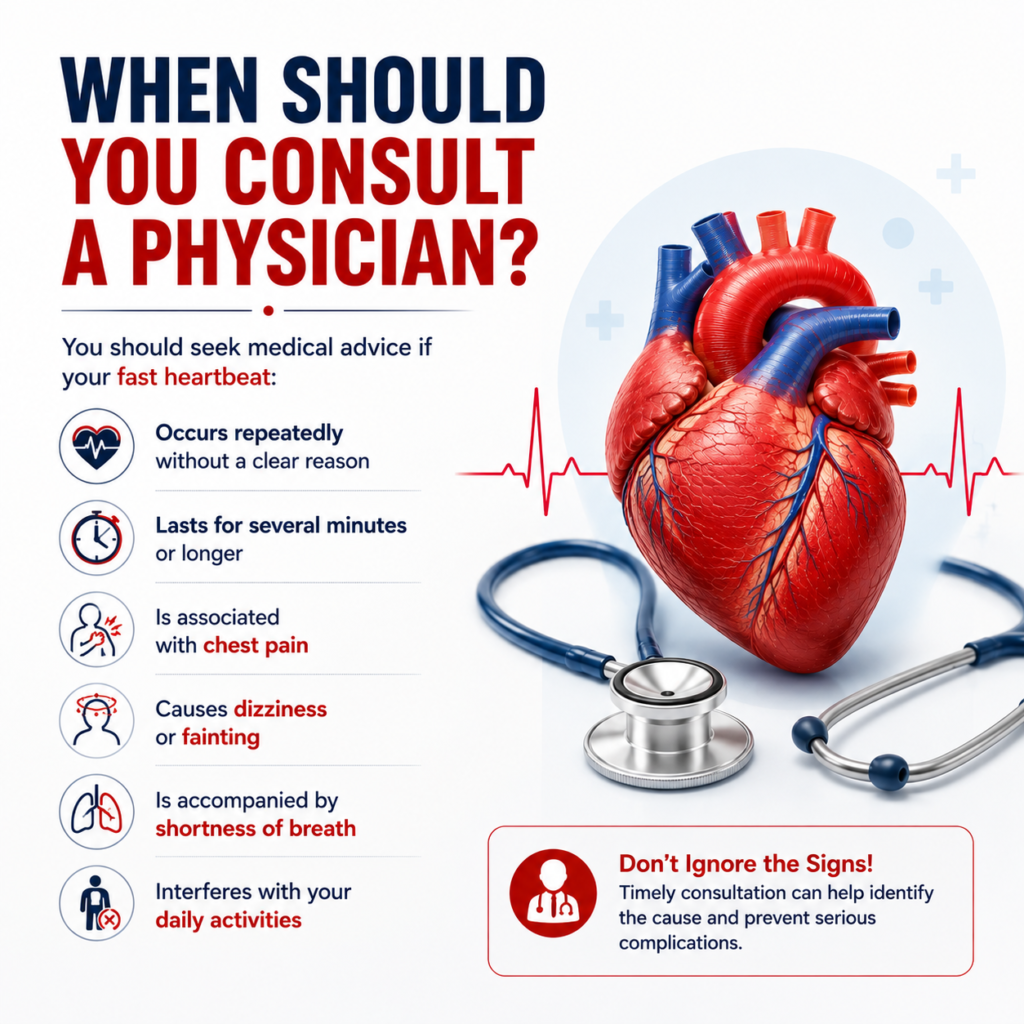
You should seek medical advice if your fast heartbeat:
- Occurs repeatedly without a clear reason
- Lasts for several minutes or longer
- Is associated with chest pain
- Causes dizziness or fainting
- Is accompanied by shortness of breath
- Interferes with your daily activities
As a physician in Lucknow, I advise patients not to ignore persistent heart palpitations. A timely evaluation may include an ECG, blood pressure measurement, blood sugar testing, thyroid function tests, or other investigations to identify the underlying cause.
According to the American Heart Association, persistent heart palpitations or irregular heart rhythms should be evaluated by a healthcare professional, especially if accompanied by concerning symptoms.
Frequently Asked Questions
Is a fast heartbeat always dangerous?
No. Exercise, stress, caffeine, and excitement can temporarily increase heart rate. However, persistent or unexplained episodes should be medically evaluated.
Can diabetes cause a fast heartbeat?
Yes. Low blood sugar and diabetes-related complications can sometimes trigger a rapid heartbeat or palpitations.
When should I go to the emergency room?
Seek emergency medical care if a fast heartbeat is accompanied by chest pain, severe shortness of breath, fainting, or loss of consciousness.
Which tests help diagnose a fast heartbeat?
Your physician may recommend an ECG, blood tests, thyroid function tests, blood sugar tests, or Holter monitoring, depending on your symptoms.
Final Thoughts
A fast heartbeat is not always a sign of serious heart disease, but it should never be ignored if it is persistent or accompanied by other warning signs. Identifying the underlying cause early allows appropriate treatment and helps prevent complications.
If you are searching for the Best Physician in Lucknow for the evaluation of heart palpitations, diabetes, hypertension, thyroid disorders, or other lifestyle-related conditions, timely medical consultation can help you receive the right diagnosis and treatment.