One of the most common questions my patients ask after being diagnosed with diabetes is:
“Doctor, if I follow a strict diet, will my diabetes stay under control?”
It’s a very important question, and the answer is not entirely.
Over the years, while treating thousands of patients with diabetes, I’ve noticed that many people believe diabetes management is all about avoiding sugar and following a diet chart. While a healthy diet plays a significant role, it is only one part of managing diabetes effectively.
A Diabetes Diet Is Important…
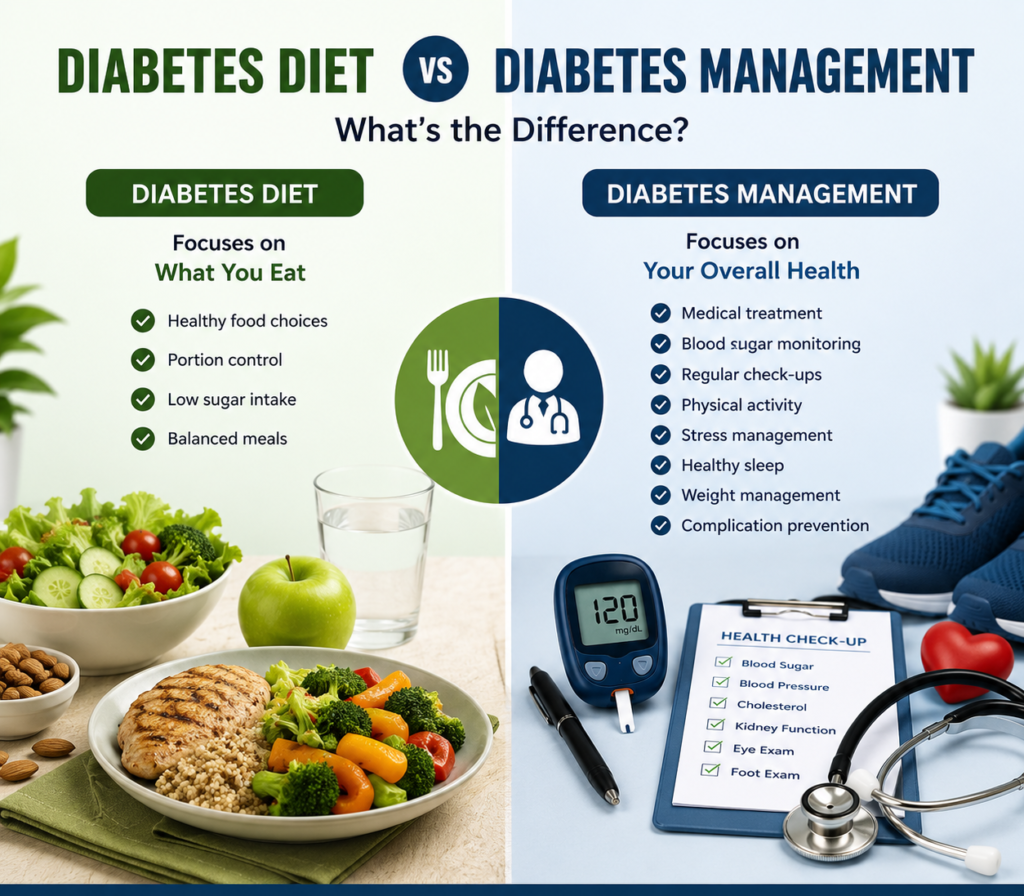
A diabetes-friendly diet helps regulate blood sugar levels by encouraging balanced meals, controlled carbohydrate intake, adequate protein, healthy fats, and fibre-rich foods. Choosing the right foods at the right time can reduce sudden spikes in blood sugar and support overall health.
However, even patients who follow their diet sincerely sometimes experience uncontrolled blood sugar levels. This is because diet alone cannot manage diabetes.
A balanced diabetes diet plays an important role in blood sugar control. International organizations such as the American Diabetes Association provide evidence-based recommendations on healthy eating patterns for people living with diabetes.
Diabetes Management Is a Complete Approach
Diabetes is a long-term condition that affects multiple systems in the body. Managing it successfully requires much more than healthy eating.
In my clinical practice, I encourage patients to focus on a comprehensive diabetes management plan that includes:
- Regular physician consultations
- Timely blood sugar and HbA1c monitoring
- Appropriate medications
- Personalized nutrition
- Physical activity
- Weight management
- Stress management
- Adequate sleep
- Regular screening for diabetes-related complications
Each of these factors plays an important role in keeping diabetes under control.
Why Diet Alone May Not Be Enough
Many patients tell me,
“Doctor, I’m eating healthy, but my sugar is still high.”
In many cases, the problem isn’t the diet may be irregular medication, lack of exercise, poor sleep, ongoing stress, weight gain, or even changes in the body’s insulin response.
That’s why simply following a diet chart without regular medical review may not provide the desired results.
Think Beyond Blood Sugar Numbers
Managing diabetes isn’t just about today’s glucose reading.
As a physician, I also pay close attention to a patient’s HbA1c, blood pressure, kidney health, eye health, cholesterol levels, weight, and foot health. These factors help us understand how diabetes is affecting the body over time and whether treatment needs to be adjusted.
Early monitoring can also help reduce the risk of complications involving the heart, kidneys, eyes, and nerves.
A Personalized Plan Makes the Difference
No two patients with diabetes are exactly alike.
Age, occupation, lifestyle, eating habits, medical history, medications, and personal health goals are different for every individual. That’s why I believe diabetes management should never follow a one-size-fits-all approach.
A personalized plan that combines medical care, nutrition, diagnostics, and healthy lifestyle habits is often more effective than relying on diet alone.
Final Thoughts
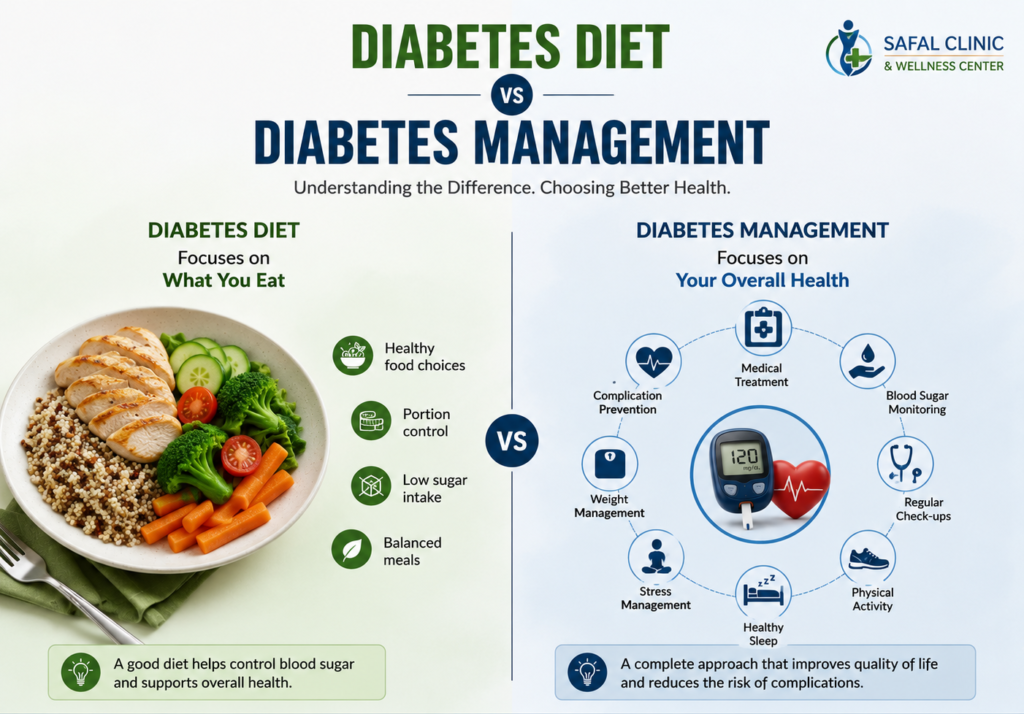
A healthy diet is undoubtedly one of the foundations of good diabetes care,but it is not the complete solution.
Effective diabetes management is a continuous journey that requires the right medical guidance, regular monitoring, informed food choices, and sustainable lifestyle changes.
If you have diabetes, don’t focus only on what is on your plate. Focus on your overall health. With a structured approach and regular follow-up, diabetes can be managed more effectively, helping you live a healthier and more active life.
About the Author
Dr. Dileep Verma is a Physician & Diabetologist in Lucknow with over 22 years of clinical experience in managing diabetes and other lifestyle-related conditions. Through the Safal Diabetes Management Program, he follows an integrated approach that combines physician care, diagnostics, personalized nutrition, and lifestyle guidance to help patients achieve better long-term diabetes control.